


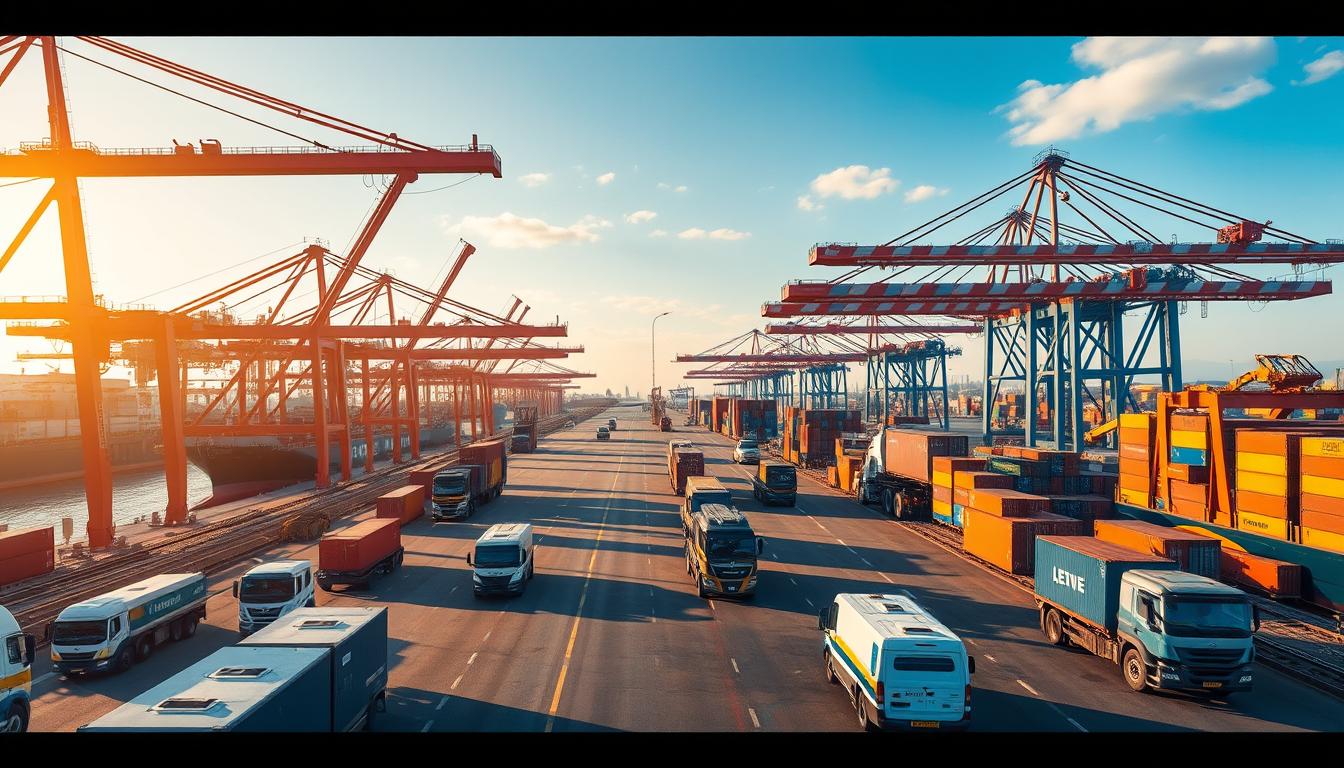

Germany is a significant player in global trade, with major ports like Hamburg and Bremerhaven driving the country’s economy. The integration of smart technologies is revolutionizing the logistics sector.
The adoption of IoT-Based Customs Technologies is enhancing the efficiency of trade operations. Germany’s strategic location makes it an ideal hub for the implementation of these innovations.
As the logistics landscape continues to evolve, understanding the impact of these technologies is crucial. This section provides an overview of the current state of smart port automation and its potential to transform German trade.
Key Takeaways
- Germany’s major ports are driving the adoption of smart port automation.
- IoT-Based Customs Technologies are enhancing trade efficiency.
- Smart technologies are revolutionizing the logistics sector.
- Germany’s strategic location makes it a hub for innovation.
- The impact of these technologies on German trade is significant.
Introduction to Smart Port Automation in Germany
Smart port automation is being increasingly adopted in Germany to modernize port operations and enhance sustainability. The Port of Hamburg, one of Europe’s busiest ports, is a significant example of smart port automation. It has implemented various technologies to enhance efficiency and reduce environmental impact.
The concept of smart port automation involves the use of advanced technologies such as automated container handling and real-time tracking systems. These technologies play a crucial role in improving operational efficiency and sustainability in ports.
- Automated container handling systems
- Real-time tracking and monitoring systems
- Data analytics for predictive maintenance
According to a report by the German Federal Ministry of Transport and Digital Infrastructure, the adoption of smart port technologies has led to significant improvements in operational efficiency and reductions in environmental impact. “The integration of digital technologies in port operations is a crucial step towards achieving sustainable and efficient logistics,” the report states.
“The future of port operations lies in the effective integration of technology and innovation.”
A comparison of traditional port operations with smart port automation highlights the benefits of adopting advanced technologies.
| Aspect | Traditional Port Operations | Smart Port Automation |
|---|---|---|
| Operational Efficiency | Limited by manual processes | Enhanced through automation |
| Environmental Impact | Higher emissions | Reduced emissions through optimized operations |
The implementation of smart port automation in Germany is a step towards creating more efficient, sustainable, and competitive ports. As the maritime industry continues to evolve, the adoption of advanced technologies will play a crucial role in shaping its future.
The Role of IoT in Modernizing Port Operations
In Germany, the adoption of IoT solutions is modernizing port operations, enhancing both operational efficiency and supply chain visibility. The integration of IoT technologies, such as sensors and RFID tags, allows for real-time monitoring and management of port operations.
Real-Time Data Analytics for Efficiency
IoT enables the collection and analysis of real-time data, which is crucial for optimizing port operations. For instance, IoT sensors can track container temperatures and locations in real-time, ensuring that goods are handled and stored appropriately.
Benefits of Real-Time Data Analytics:
- Improved operational efficiency
- Enhanced decision-making capabilities
- Reduced costs through optimized resource allocation
| Feature | Description | Benefit |
|---|---|---|
| Real-Time Tracking | Monitoring of container location and status | Increased supply chain visibility |
| Condition Monitoring | Tracking of container temperature and humidity | Improved goods handling and storage |
| Predictive Maintenance | Anticipating equipment failures | Reduced downtime and maintenance costs |
Enhanced Supply Chain Visibility
IoT technologies significantly enhance supply chain visibility by providing real-time insights into the location and condition of goods. This transparency enables more efficient logistics management and reduces the risk of delays or losses.
The impact of IoT on supply chain visibility is multifaceted, improving not only the tracking of goods but also the overall resilience of the supply chain.
Key Benefits of Smart Port Technologies
With the implementation of smart port automation, German ports are experiencing enhanced operational capabilities. The integration of IoT solutions for ports and other smart technologies is leading to significant improvements in various areas.
Increased Operational Efficiency
The adoption of smart port technologies has streamlined port operations, making them more efficient. Automated systems reduce the need for manual intervention, minimizing errors and increasing productivity. For instance, automated cranes and real-time data analytics enable faster and more accurate cargo handling.
| Operational Aspect | Traditional Port | Smart Port |
|---|---|---|
| Cargo Handling | Manual intervention, prone to errors | Automated cranes, real-time data analytics |
| Berth Planning | Manual scheduling, potential for delays | Optimized berth planning, reduced wait times |
Cost Reductions and Resource Management
Smart port technologies also lead to significant cost savings. By optimizing resource allocation and reducing energy consumption, ports can lower their operational costs. For example, smart lighting systems adjust based on the time of day and activity levels, reducing energy waste.
Improved Safety and Security Measures
Enhanced safety and security are critical benefits of smart port technologies. The use of surveillance systems and predictive analytics helps in identifying potential safety risks before they become incidents. This proactive approach ensures a safer working environment for personnel and more secure cargo handling.

The overall impact of smart port technologies is a more efficient, cost-effective, and secure port operation. As German ports continue to adopt and integrate these technologies, they are poised to become leaders in the global maritime industry.
Current Trends in Port Automation
Recent advancements in port automation are transforming the way German ports operate, with a focus on technological innovation. The integration of advanced technologies is enhancing operational efficiency, reducing costs, and improving safety.
Adoption of AI and Machine Learning
The use of Artificial Intelligence (AI) and Machine Learning (ML) is becoming increasingly prevalent in port automation. These technologies enable predictive maintenance, allowing for the early detection of potential issues and minimizing downtime. AI and ML algorithms can analyze vast amounts of data to optimize port operations, such as scheduling and resource allocation.
Some key benefits of AI and ML in port automation include:
- Enhanced predictive maintenance capabilities
- Improved operational efficiency through optimized scheduling
- Better decision-making through data-driven insights
Autonomous Vehicles in Ports
Autonomous vehicles are being introduced in German ports to further enhance efficiency and reduce labor costs. These vehicles can be used for various tasks, including cargo handling and transportation within the port. The use of autonomous vehicles can lead to significant improvements in safety and productivity.
The benefits of autonomous vehicles in ports include:
- Increased safety through reduced human error
- Improved productivity through continuous operation
- Enhanced flexibility in port operations
As German ports continue to adopt these cutting-edge technologies, they are poised to become even more efficient and competitive on the global stage. The integration of AI, ML, and autonomous vehicles is set to revolutionize port operations, driving innovation and growth in the maritime sector.
Overview of Customs Technologies in Germany
Customs technologies in Germany are being modernized to improve efficiency, compliance, and trade facilitation. The country has been actively implementing digital customs solutions to streamline the customs process.
Digital Documentation and E-Customs
One of the key advancements in German customs technology is the adoption of digital documentation and e-customs systems. This shift towards digitalization has significantly reduced paperwork and increased the speed of customs clearance. The use of electronic customs declaration systems allows for more efficient processing of import and export goods.
E-customs platforms have been introduced to facilitate the electronic submission of customs declarations. This has not only reduced the administrative burden on traders but also improved compliance with customs regulations.
“The digitalization of customs processes is a crucial step towards a more efficient and transparent customs environment.” –
Integration with Global Trade Networks
Germany is also focusing on integrating its customs systems with global trade networks. This integration enables the seamless exchange of customs data between Germany and other countries, further facilitating international trade.
| Feature | Description | Benefit |
|---|---|---|
| Digital Documentation | Electronic submission of customs declarations | Reduced paperwork and faster clearance |
| E-Customs Platforms | Online portals for customs declarations | Improved compliance and efficiency |
| Global Trade Integration | Seamless data exchange with other countries | Enhanced international trade facilitation |
The integration of customs technologies in Germany is a significant step towards creating a more efficient and compliant customs environment. As the country continues to modernize its customs processes, it is likely to see further improvements in trade facilitation and economic efficiency.
Major Players in Smart Port Automation
Smart port automation in Germany is being driven forward by a combination of leading ports and technology providers. This collaboration is crucial in the development and implementation of innovative solutions that enhance efficiency, reduce costs, and improve safety within the maritime sector.
Leading German Ports: Hamburg and Bremen
The ports of Hamburg and Bremen are at the forefront of adopting smart port technologies in Germany. Hamburg, being one of the busiest ports in Europe, has been investing heavily in automation and digitalization. Initiatives such as the Hamburg Port Authority’s digitalization strategy aim to make the port more efficient and competitive.
Bremen’s ports, including Bremerhaven, are also embracing automation to streamline their operations. The use of automated container handling systems and advanced logistics software is enhancing the productivity and reducing the environmental impact of these ports.
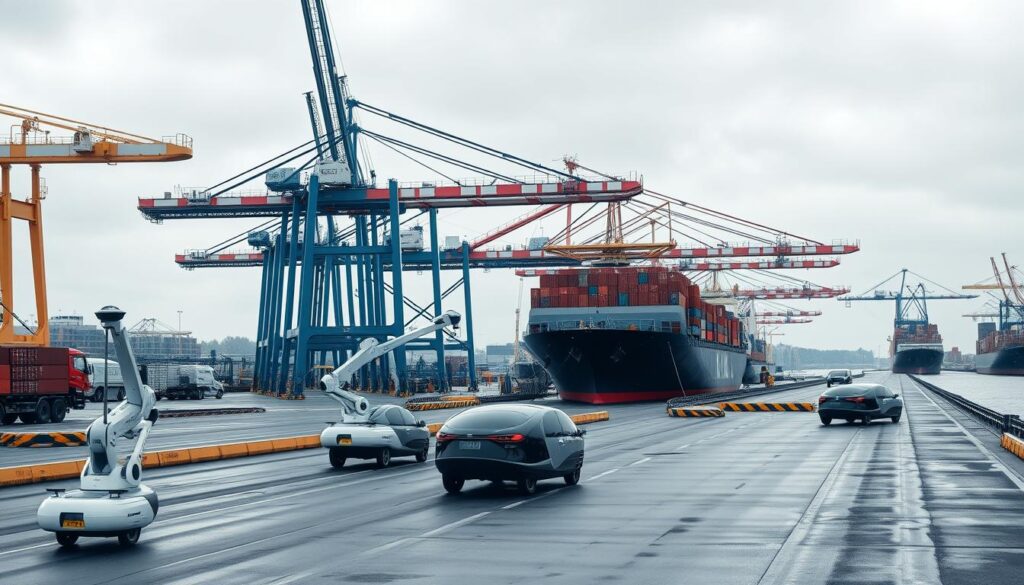
Technology Providers Driving Innovation
Technology providers play a vital role in driving innovation in smart port automation. Companies specializing in IoT solutions, AI, and data analytics are working closely with German ports to implement cutting-edge technologies.
- Some of the key technology providers include firms that offer automated guided vehicles (AGVs) and smart cranes that enhance operational efficiency.
- Other providers are focusing on cybersecurity solutions to protect the increasingly digital infrastructure of ports from potential threats.
The collaboration between these technology providers and German ports is expected to drive further advancements in smart port automation, making Germany’s maritime industry more competitive on a global scale.
Case Studies of Successful Implementation
The adoption of IoT solutions for ports has enhanced operational efficiency in major German ports. This section highlights successful implementations of smart port technologies, focusing on the Port of Hamburg and Bremen.
Hamburg Port’s IoT Integration
The Port of Hamburg has been at the forefront of integrating IoT technologies to streamline its operations. By implementing IoT-based customs technologies, the port has achieved significant improvements in cargo handling and monitoring. For instance, real-time data analytics has enabled more efficient container tracking and management.
The IoT integration has also facilitated better coordination between different stakeholders, including shipping lines, terminal operators, and customs authorities. This has resulted in reduced waiting times for vessels and improved overall supply chain visibility.
Bremen’s Automated Cargo Handling
Bremen’s port has focused on automating its cargo handling systems to enhance operational efficiency. The implementation of automated stacking cranes and robotic process automation has significantly increased the speed and accuracy of cargo handling operations.
These automated systems have not only reduced labor costs but also improved safety by minimizing the risk of accidents. Furthermore, the data collected from these systems provides valuable insights for optimizing future operations.
Both Hamburg and Bremen’s initiatives demonstrate the potential of smart port automation in enhancing the competitiveness of German ports on a global scale.
Challenges Facing Smart Port Automation
The path to achieving smart port automation in Germany is complicated by several key issues that need to be addressed to ensure successful implementation.
Cybersecurity Risks
One of the significant challenges facing smart port automation is the increased risk of cybersecurity threats. As ports become more interconnected through IoT devices, the potential attack surface expands, making them vulnerable to cyber-attacks. These threats can compromise the integrity of port operations, leading to delays, financial losses, and even safety risks.
To mitigate these risks, German ports are investing in robust cybersecurity measures, including:
- Advanced threat detection systems
- Regular security audits
- Employee training programs
Workforce Adaptation and Training
Another challenge is the need for workforce adaptation and training. The introduction of smart technologies requires port workers to acquire new skills to manage and maintain these systems effectively. This necessitates comprehensive training programs that not only teach technical skills but also foster a culture of innovation and adaptability.
Some strategies for successful workforce adaptation include:
- Implementing vocational training programs tailored to the needs of smart port operations
- Encouraging collaboration between technology providers and port workers to develop practical solutions
- Offering continuous learning opportunities to keep pace with technological advancements
By addressing these challenges, Germany can ensure that its ports remain competitive and efficient, leveraging the full potential of smart port automation and IoT customs solutions.
Future Outlook for Smart Ports in Germany
Germany’s smart port initiatives are poised to revolutionize its maritime trade, enhancing efficiency and sustainability. As the country continues to invest in smart port technologies, the future of its ports looks increasingly automated and environmentally friendly.
The ongoing integration of IoT-Based Customs Technologies is expected to play a crucial role in modernizing port operations. With real-time data analytics and enhanced supply chain visibility, German ports are likely to become more competitive and efficient.
Trends to Watch in 2024 and Beyond
Several trends are expected to shape the future of smart ports in Germany:
- Increased adoption of AI and machine learning for predictive maintenance and operational optimization.
- Expansion of autonomous vehicles and drones for cargo handling and surveillance.
- Further integration of digital documentation and e-customs processes to streamline trade.
As highlighted by industry experts, “The future of ports lies in their ability to adapt to new technologies and sustainability requirements.” This underscores the importance of continuous innovation and investment in smart port technologies.
Potential for Sustainability Initiatives
Smart port technologies also offer significant potential for sustainability initiatives. By optimizing energy consumption and reducing waste, German ports can minimize their environmental footprint. For instance, the use of IoT sensors can help monitor and manage energy usage across port facilities.
Some of the key sustainability initiatives to watch include:
- Implementation of green energy solutions, such as wind and solar power.
- Adoption of electric and hybrid vehicles for cargo handling and transportation.
- Development of green infrastructure, including shore power for vessels.
As Germany continues to lead in the adoption of smart port technologies, it sets a precedent for other countries to follow. The combination of technological innovation and a focus on sustainability will be crucial in shaping the future of maritime trade.
Government Policies Supporting Smart Ports
The German government has been proactive in supporting the development of smart ports through various policies and initiatives. These efforts aim to enhance Germany Port Automation, promote Smart Customs Technologies, and integrate IoT Customs Solutions.
Funding Programs and Incentives
The government has introduced funding programs to encourage the adoption of smart port technologies. These programs provide financial incentives for ports to invest in automation and digitalization, thereby improving operational efficiency and reducing costs.
Regulatory Changes Impacting Automation
Regulatory changes have also played a crucial role in facilitating the growth of smart ports in Germany. Updates in customs regulations have streamlined the import and export processes, making it easier for ports to adopt Smart Customs Technologies and IoT Customs Solutions.
These government policies are expected to drive further innovation in Germany’s port sector, enhancing its competitiveness and sustainability.
FAQ
What is smart port automation, and how is it being implemented in Germany?
Smart port automation refers to the use of advanced technologies, such as automated container handling and real-time tracking systems, to improve operational efficiency and sustainability in ports. In Germany, major ports like Hamburg are adopting these technologies to enhance their operations.
What role does IoT play in modernizing port operations?
IoT technologies, such as sensors and RFID tags, are used to monitor and manage port operations more effectively, improving both efficiency and security. Real-time data analytics and enhanced supply chain visibility are key benefits of IoT in port operations.
What are the key benefits of smart port technologies?
The key benefits of smart port technologies include increased operational efficiency, cost reductions, and improved safety and security. These technologies are being implemented in German ports, resulting in positive impacts on operations.
What are the current trends in port automation?
Current trends in port automation include the adoption of AI and machine learning, as well as the use of autonomous vehicles. These technologies are being used to improve operational efficiency and reduce costs in German ports.
How are customs technologies improving the efficiency of customs processes in Germany?
Customs technologies, such as digital documentation and e-customs systems, are improving the efficiency of customs processes and enhancing compliance with regulations in Germany.
Who are the major players in smart port automation in Germany?
Major players in smart port automation in Germany include leading German ports, such as Hamburg and Bremen, and technology providers driving innovation in the sector.
What are some successful implementations of smart port technologies in German ports?
Successful implementations of smart port technologies in German ports include Hamburg’s IoT integration and Bremen’s automated cargo handling, which have improved operations and efficiency.
What are the challenges facing smart port automation, and how can they be mitigated?
Challenges facing smart port automation include cybersecurity risks and the need for workforce adaptation and training. Strategies for mitigating these challenges include implementing robust cybersecurity measures and providing training programs for workers.
What is the future outlook for smart ports in Germany?
The future outlook for smart ports in Germany includes trends to watch, such as the continued adoption of AI and machine learning, and the potential for sustainability initiatives, which are expected to evolve and have positive impacts on the environment and trade.
How are government policies supporting the development of smart ports in Germany?
Government policies, including funding programs and regulatory changes, are facilitating the adoption of smart port technologies and driving innovation in the sector.
What is the impact of smart port automation on the environment?
Smart port automation is expected to have a positive impact on the environment by reducing emissions and improving sustainability. Initiatives such as the use of electric or hybrid vehicles and the optimization of operations are contributing to a more sustainable future for ports.
How does smart port automation improve safety and security in ports?
Smart port automation improves safety and security in ports by implementing advanced technologies, such as real-time monitoring and surveillance systems, which enhance the overall security of port operations.