


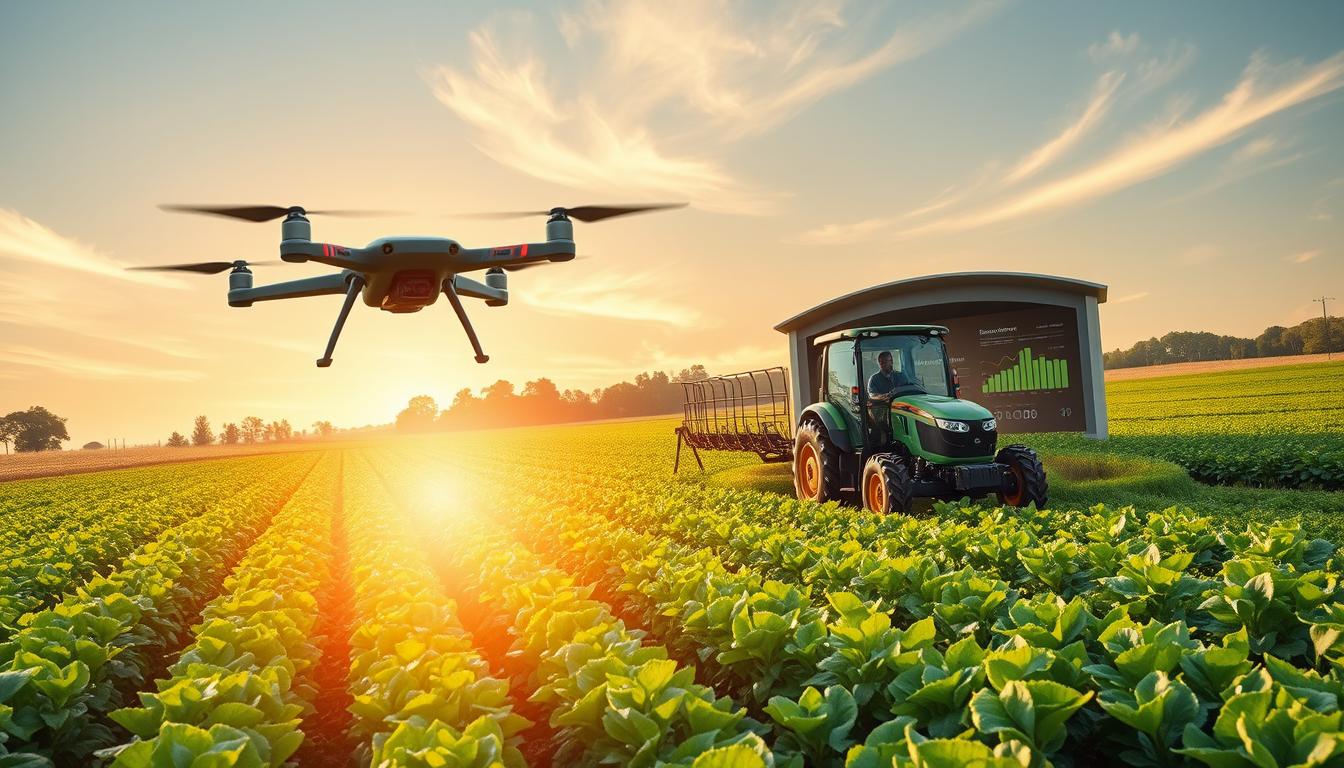

The agricultural landscape in Germany is undergoing a significant transformation with the adoption of precision agriculture and drone-supported decision support systems. These technologies are revolutionizing farming practices by enhancing resource use efficiency and productivity.
The integration of drone technology in farming enables farmers to collect and analyze data on crop health, soil moisture, and other vital parameters. This information is crucial for making informed decisions, reducing waste, and improving crop yields.
Key Takeaways
- Precision agriculture is transforming farming practices in Germany.
- Drone-supported decision support systems enhance resource use efficiency.
- The use of drone technology improves crop monitoring and management.
- Agricultural productivity is increasing with the adoption of precision agriculture.
- Data-driven farming decisions are becoming more prevalent in German agriculture.
Understanding Precision Agriculture
By leveraging advanced technologies, precision agriculture aims to optimize farming techniques. This approach involves the use of sophisticated tools and methods to enhance crop yields, reduce waste, and promote sustainable farming practices.
Definition and Principles
Precision agriculture is defined as a farming management concept that involves observing, measuring, and responding to variability in crops. The core principles revolve around using data analytics, remote sensing, and GPS technology to make informed decisions.
“The future of farming lies in precision agriculture, where technology and data come together to create more efficient and sustainable practices,” as noted by agricultural technology experts. This quote highlights the significance of integrating technology in modern farming.
Importance in Modern Farming
The importance of precision agriculture in modern farming cannot be overstated. It allows farmers to:
- Improve crop yields through data-driven decision-making
- Reduce waste by applying precise amounts of water, fertilizers, and pesticides
- Enhance sustainability by minimizing environmental impact
For more insights on how precision agriculture is being adopted in various regions, visit this resource.
Key Technologies Involved
Several key technologies are integral to precision agriculture, including:
| Technology | Description |
|---|---|
| GPS and GIS | Used for mapping and tracking crop health and variability |
| Remote Sensing | Involves using drones and satellites to gather data on crop conditions |
| Data Analytics | Helps in interpreting data to make informed farming decisions |
The integration of these technologies is transforming the agricultural landscape, making farming more efficient and productive.
The Role of Drones in Agriculture
The integration of drones in agricultural practices has revolutionized the way farmers approach crop management and soil analysis. By leveraging advanced technologies such as remote sensing and data analytics, drones are enhancing precision farming techniques.
Overview of Agricultural Drones
Agricultural drones are unmanned aerial vehicles (UAVs) designed to capture high-resolution images and data on crop health, soil moisture, and other vital factors. These drones are equipped with various sensors, including multispectral and hyperspectral cameras, which provide detailed insights into agricultural conditions.
According to a report by the
Food and Agriculture Organization of the United Nations
, the use of drones in agriculture is expected to increase significantly, driven by the need for more efficient farming practices.
Benefits of Drone Usage
The benefits of using drones in agriculture are multifaceted:
- Improved crop monitoring through real-time data collection
- Enhanced soil analysis capabilities
- Increased efficiency in crop spraying and fertilization
- Better decision-making through data-driven insights
A study by John Deere found that farmers using drones for crop monitoring were able to increase yields by up to 15%.
Types of Data Collected by Drones
Drones collect a variety of data types, including:
| Data Type | Description | Application |
|---|---|---|
| Multispectral Imagery | Captures data on crop health and growth | Crop monitoring and yield prediction |
| Thermal Imagery | Provides insights into soil moisture and temperature | Irrigation management |
| RGB Imagery | High-resolution visual data | Crop scouting and field inspection |
The data collected by drones is analyzed using sophisticated software to provide actionable insights to farmers, enabling them to make informed decisions and optimize their farming practices.
Drone-Supported Decision Support Systems Explained
Decision support systems, when combined with drone data, offer unprecedented opportunities for farmers to optimize their practices. These systems leverage data from various sources, including drones, to provide farmers with insights and recommendations to improve their farming practices.
Definition and Functionality
Drone-supported decision support systems are sophisticated tools that analyze data collected from drones to provide actionable advice to farmers. The functionality of these systems includes data processing, analysis, and visualization, enabling farmers to make informed decisions about crop management, irrigation, and pest control.
The process involves several key steps:
- Data collection through drones equipped with various sensors
- Data processing and analysis using advanced algorithms
- Generation of insights and recommendations for farmers
- Presentation of findings through user-friendly interfaces
Integration with Precision Agriculture
The integration of drone-supported decision support systems with precision agriculture is revolutionizing farming practices. Precision agriculture focuses on optimizing crop yields and reducing waste by applying precise amounts of inputs such as water, fertilizers, and pesticides. By leveraging drone data, farmers can gain a more detailed understanding of their fields, enabling more precise application of resources.
This integration offers several benefits, including:
- Enhanced crop monitoring and management
- Improved resource allocation and reduced waste
- Increased crop yields and better quality produce
Examples of Decision Support Systems
Several decision support systems are being used in agriculture today. For instance, systems like Cropio and FarmLogs provide farmers with valuable insights into their crop health, soil moisture levels, and weather forecasts. These systems help farmers make data-driven decisions, improving their overall efficiency and productivity.
Some notable examples include:
| System | Features | Benefits |
|---|---|---|
| Cropio | Crop monitoring, soil moisture analysis | Improved crop yields, reduced water usage |
| FarmLogs | Field mapping, weather forecasting | Enhanced field management, better planning |

By combining drone technology with decision support systems, farmers in Germany can significantly enhance their farming practices, leading to improved productivity and sustainability.
Current Status of Precision Agriculture in Germany
The adoption of precision agriculture in Germany is a complex phenomenon, influenced by various regional factors. As the agricultural sector continues to evolve, understanding the current status of precision agriculture is crucial for stakeholders.
Adoption Rates
Precision agriculture has gained significant traction in Germany, with a notable increase in adoption rates over the past decade. According to recent studies, over 50% of German farms have incorporated some form of precision agriculture techniques into their operations.
The use of precision agriculture technologies such as GPS-guided farming, drones, and satellite imaging has become more prevalent. These technologies enable farmers to make data-driven decisions, improving crop yields and reducing waste.
Regional Variations
Regional variations in the adoption of precision agriculture are significant in Germany. For instance, farms in the southern regions, such as Bavaria, have been at the forefront of adopting precision agriculture technologies.
- High adoption rates are observed in regions with large-scale farms and fertile soil.
- Lower adoption rates are often seen in smaller, more traditional farming communities.
Challenges Faced by Farmers
Despite the benefits, German farmers face several challenges when adopting precision agriculture technologies. The high initial investment costs and the need for technical expertise are significant barriers.
- The cost of acquiring and maintaining precision agriculture equipment is a major deterrent for many farmers.
- Lack of technical knowledge and training programs can hinder the effective use of precision agriculture technologies.
Addressing these challenges will be crucial for the widespread adoption of precision agriculture in Germany. By understanding the current status and the factors influencing adoption, stakeholders can better support farmers in overcoming these barriers.
Key Players in the Drone Agriculture Market
Germany’s agricultural sector is being revolutionized by drone technology, with several key players emerging in the market. The adoption of drones in agriculture is driven by the need for precision farming techniques, which enhance crop yields and reduce environmental impact.
Leading Companies in Germany
Several prominent companies are leading the way in drone technology for agriculture in Germany. These companies are developing sophisticated drone systems capable of capturing high-resolution imagery and collecting detailed data on crop health, soil moisture, and other vital parameters.
Some of the notable companies include:
- PrecisionHawk: Known for its drone solutions that provide detailed insights into crop health and farm management.
- SenseFly: Offers a range of drones designed for agricultural applications, including crop monitoring and surveying.
- DJIAgriculture: Provides drone solutions integrated with agricultural software for efficient farm management.
Collaborations and Partnerships
Collaborations and partnerships are playing a crucial role in driving innovation in the drone agriculture market. By working together, companies can leverage each other’s strengths to develop more effective solutions.
For instance, drone manufacturers are partnering with agricultural software companies to create integrated solutions that provide farmers with actionable insights.
| Company | Partnership | Outcome |
|---|---|---|
| PrecisionHawk | Partnered with agricultural software firms | Enhanced data analysis capabilities |
| SenseFly | Collaborated with drone hardware manufacturers | Improved drone durability and performance |
Innovations from Startups
Startups are also making significant contributions to the drone agriculture market in Germany. These companies are often at the forefront of innovation, developing new technologies and applications for drone-based farming.
Some startups are focusing on developing specialized drones for specific agricultural tasks, such as crop spraying or seeding. Others are creating software platforms that help farmers interpret the data collected by drones.
Examples of innovative startups include:
- AgroDrone: Developing drones for precision crop spraying.
- FarmData: Creating software for analyzing drone-collected data.
Regulatory Framework for Drones in Agriculture
Germany has established a set of regulations to oversee the integration of drones into agricultural practices, balancing innovation with safety. This regulatory framework is crucial for ensuring that the benefits of drone technology are realized while minimizing risks.
Overview of German Regulations
The German government has implemented specific regulations governing the use of drones in agriculture. These regulations include:
- Registration requirements for drones above a certain weight threshold
- Licensing requirements for drone operators
- Restrictions on flying over populated areas or sensitive infrastructure
- Guidelines for data protection and privacy
These regulations are designed to ensure safe and responsible drone operation. Compliance with these regulations is mandatory for all drone operators in Germany.
Safety and Compliance Requirements
Safety is a paramount concern in the regulation of drones. German regulations mandate that drone operators adhere to strict safety protocols, including:
- Maintaining a visual line of sight with the drone at all times
- Avoiding flights near airports or other restricted airspace
- Implementing measures to prevent interference with other aircraft
Regular inspections and audits are conducted to ensure compliance with these safety requirements. Drone operators found to be non-compliant may face penalties or have their licenses revoked.

Future Legislative Trends
As drone technology continues to evolve, it is likely that the regulatory framework governing their use will also undergo changes. Emerging trends in drone legislation include:
- Increased focus on beyond-visual-line-of-sight (BVLOS) operations
- Integration of drones into the national airspace system
- Enhanced data security measures
Staying abreast of these legislative trends is essential for drone operators and farmers who rely on drone technology. By understanding future regulatory directions, stakeholders can better prepare for the evolving landscape of drone usage in agriculture.
Benefits of Combining Drones and Decision Support
The integration of drones and decision support systems is revolutionizing precision agriculture by providing farmers with more accurate data, improving crop management, and promoting environmental sustainability.
This combination is particularly beneficial as it allows for the collection and analysis of vast amounts of data, which can then be used to make informed decisions. The synergy between drones and decision support systems is a game-changer for modern farming practices.
Enhanced Data Accuracy
Drones equipped with high-resolution cameras and sensors can capture detailed images of crops, soil, and other factors affecting farm health. When this data is fed into decision support systems, it enhances the accuracy of the insights provided to farmers.
- Precision: Drones can capture data at a much higher resolution than traditional methods, allowing for more precise monitoring of crop health.
- Real-time Data: The use of drones enables farmers to receive real-time data, facilitating timely interventions.
- Comprehensive Coverage: Drones can cover large areas quickly, ensuring that no part of the farm is overlooked.
Improved Crop Management
The combination of drones and decision support systems significantly improves crop management by providing actionable insights based on accurate data. This enables farmers to optimize their farming practices, leading to better crop yields and reduced waste.
Some of the key benefits include:
- Early Detection of Issues: Drones can identify problems such as pest infestations, disease outbreaks, and nutrient deficiencies early, allowing for prompt action.
- Targeted Interventions: Decision support systems can analyze drone data to recommend targeted interventions, reducing the need for blanket applications of fertilizers or pesticides.
- Optimized Irrigation: By monitoring soil moisture levels and crop water stress, drones and decision support systems can help optimize irrigation schedules.
Environmental Sustainability
The use of drones and decision support systems also promotes environmental sustainability by reducing the environmental footprint of farming practices. This is achieved through more efficient use of resources and reduced application of chemicals.
- Reduced Chemical Usage: By identifying areas that require treatment, drones and decision support systems can help reduce the overall use of chemicals.
- Water Conservation: Optimized irrigation schedules help conserve water, a critical resource in agriculture.
- Soil Health Monitoring: Drones can monitor soil health, enabling farmers to take steps to maintain or improve it.
In conclusion, the integration of drones and decision support systems offers numerous benefits for precision agriculture, including enhanced data accuracy, improved crop management, and environmental sustainability.
Case Studies of Successful Implementation
German agricultural businesses are leveraging drone technology to optimize crop management and reduce costs. This section highlights several case studies that demonstrate the successful implementation of drone-supported decision support systems in German farms.
Examples from German Farms
Several farms in Germany have adopted drone technology to improve their agricultural practices. For instance, a farm in Bavaria used drones equipped with multispectral cameras to monitor crop health. This allowed them to identify areas where crops were under stress and take targeted action.
- A farm in Lower Saxony utilized drones for crop monitoring and yield prediction, resulting in a 15% increase in yield.
- A farm in North Rhine-Westphalia used drones for precision spraying, reducing chemical usage by 20%.
Outcomes and Lessons Learned
The outcomes from these case studies have been overwhelmingly positive. Farms that adopted drone technology reported improved crop yields and reduced operational costs. One of the key lessons learned is the importance of integrating drone data with decision support systems to maximize the benefits of precision agriculture.
- Regular drone monitoring allowed farms to detect issues early, reducing the risk of crop failure.
- The use of decision support systems helped farmers make data-driven decisions, improving overall farm management.
ROI from Using Drones
The return on investment (ROI) from using drones in agriculture has been significant. Farms reported an average ROI of 300% within the first two years of adopting drone technology. This was primarily due to improved crop yields and reduced operational costs.
The Future of Precision Agriculture and Drones
The future of farming in Germany is being shaped by the convergence of precision agriculture and drone technology. As we look ahead, it’s clear that this synergy will continue to drive innovation and efficiency in the agricultural sector.
Emerging Trends in Agriculture Technology
Several emerging trends are expected to influence the future of precision agriculture. One of the most significant is the increasing use of artificial intelligence (AI) to analyze data collected by drones. This AI-driven approach enables farmers to make more informed decisions, optimizing crop yields and reducing waste.
Another trend is the development of more sophisticated drone technology, including drones equipped with advanced sensors and cameras. These drones can capture detailed images and data on crop health, soil moisture, and other critical factors, providing valuable insights for farmers.
Predictions for the Next Decade
Over the next decade, we can expect to see significant advancements in precision agriculture, driven by the continued integration of drones and AI. According to industry experts, the use of drones in agriculture is likely to become more widespread, with more farmers adopting this technology to improve their operations.
For more insights on the integration of AI in agriculture, visit this resource to explore the potential of AI in modern farming.
The Role of Artificial Intelligence
Artificial intelligence is set to play a pivotal role in the future of precision agriculture. By analyzing the vast amounts of data collected by drones, AI algorithms can identify patterns and trends that may not be apparent to human analysts. This enables farmers to respond more effectively to challenges such as pests, diseases, and weather events, ultimately improving crop resilience and yields.
The combination of drones, AI, and precision agriculture represents a powerful synergy that is poised to transform the agricultural landscape in Germany and beyond.
Conclusion: The Path Forward for German Agriculture
As Germany continues to evolve in the agricultural sector, the integration of precision agriculture and drone technology is proving to be a game-changer. The adoption of these innovative solutions is enhancing crop management, improving data accuracy, and promoting environmental sustainability.
Key Takeaways
The key points from this article highlight the significance of precision agriculture, the role of drones in agriculture, and the benefits of combining these technologies. By understanding the current status of precision agriculture in Germany and the regulatory framework for drones, farmers and stakeholders can better navigate the opportunities and challenges in this field.
Innovation and Future Prospects
The future of German agriculture relies on embracing innovation and leveraging agricultural technology. As emerging trends and predictions for the next decade unfold, the role of artificial intelligence and drone-supported decision support systems will be crucial.
Moving Forward
Farmers, stakeholders, and policymakers must work together to drive the adoption of precision agriculture and drone technology. By doing so, German agriculture can remain competitive, sustainable, and poised for growth, ultimately contributing to the country’s agricultural success.
FAQ
What is precision agriculture and how does it benefit farming in Germany?
Precision agriculture involves the use of advanced technologies such as GPS, sensors, and data analytics to optimize farming practices. In Germany, it benefits farming by improving resource use efficiency, reducing waste, and increasing productivity.
How do drones contribute to precision agriculture?
Drones equipped with sensors and cameras collect data on crop health, soil moisture, and other factors, enabling farmers to make informed decisions. They enhance crop monitoring, detect issues early, and reduce the need for manual inspections.
What are the key technologies involved in precision agriculture?
Key technologies include GPS, sensors, data analytics, and remote sensing. These technologies work together to provide insights into soil conditions, crop health, and weather patterns, enabling farmers to optimize their practices.
How are drones used in crop monitoring and soil analysis?
Drones are used to capture high-resolution images of crops and soil, which are then analyzed to identify issues such as pests, diseases, and nutrient deficiencies. This information allows farmers to target their interventions more effectively.
What are the benefits of combining drones with decision support systems?
Combining drones with decision support systems enhances data accuracy, improves crop management, and promotes environmental sustainability. This integration enables farmers to make data-driven decisions and optimize their farming practices.
What is the current status of precision agriculture adoption in Germany?
Germany has seen significant adoption of precision agriculture, driven by factors such as government support, technological advancements, and the need to improve farming efficiency. However, regional variations and challenges such as high initial costs remain.
What are the regulatory requirements for using drones in agriculture in Germany?
Drone operators in Germany must comply with regulations set by the Federal Aviation Office, including requirements for pilot training, drone registration, and safety protocols. These regulations are subject to change as the technology evolves.
How can farmers in Germany benefit from using drones and precision agriculture?
By adopting drones and precision agriculture, farmers in Germany can improve crop yields, reduce costs, and minimize environmental impact. These technologies enable more efficient use of resources and better decision-making.
What are the emerging trends in precision agriculture and drones?
Emerging trends include the increasing use of artificial intelligence, machine learning, and the Internet of Things (IoT) in precision agriculture. These advancements are expected to further enhance the capabilities of drones and decision support systems.
What is the future of precision agriculture and drones in Germany?
The future is promising, with continued innovation and adoption expected. As technology advances and costs decrease, more farmers are likely to adopt precision agriculture and drone technology, driving further improvements in efficiency and sustainability.