

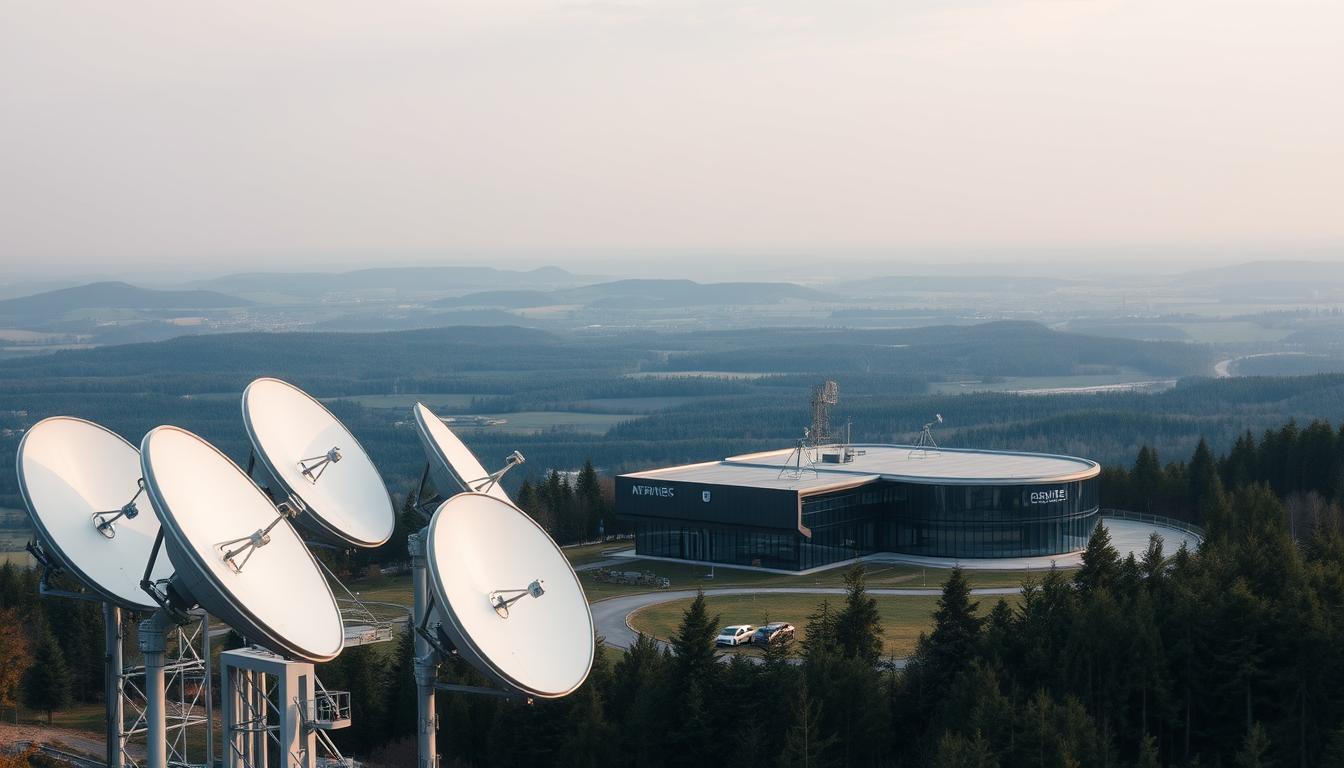

The landscape of satellite communication companies in Germany is marked by innovation and technological advancement. Düsseldorf Consulting GmbH, located at Königsallee 22, 40212 Düsseldorf, embodies the spirit of “ACTA NON VERBA!” (Deeds, not words), reflecting the proactive approach of industry leaders.
Companies like ND SATCOM and Hiltron Communications are at the forefront of this industry. ND SATCOM is renowned for its cutting-edge satellite communication equipment and solutions that support critical operations worldwide. Hiltron Communications, on the other hand, is a European system integrator, manufacturer, and distributor in the field of satellite communication and wireless broadcast solutions.
Together, these entities contribute to the robust infrastructure of satellite operators and ground station integrators in Germany, driving progress and innovation.
Key Takeaways
- ND SATCOM provides innovative satellite communication solutions.
- Hiltron Communications is a key player in European satellite communication.
- Düsseldorf Consulting GmbH is a notable entity in the industry.
- The industry is characterized by technological advancements.
- Satellite communication companies in Germany are driving global progress.
Overview of Satellite Operations in Germany
Germany is at the forefront of satellite operations, leveraging cutting-edge technology for diverse applications. The country’s strategic location and advanced infrastructure make it an ideal hub for satellite services and technology providers.
Importance of Satellite Technology
Satellite technology is crucial for modern telecommunications, navigation, and Earth observation. It enables the transmission of data across vast distances, supports weather forecasting, and facilitates environmental monitoring.
The importance of satellite technology is further underscored by its role in supporting critical infrastructure and services. For instance, the SARah satellite system, developed for the German Bundeswehr, exemplifies the advanced capabilities of Germany’s satellite technology.
Key Applications of Satellite Services
Satellite services in Germany have a wide range of applications, including telecommunications, navigation, and Earth observation. These services support various sectors such as broadcasting, maritime navigation, and environmental monitoring.
| Application | Description | Benefit |
|---|---|---|
| Telecommunications | Satellite-based communication networks | Reliable data transmission over long distances |
| Navigation | Satellite navigation systems like GPS | Accurate positioning and timing |
| Earth Observation | Satellites for environmental monitoring | Enhanced weather forecasting and environmental surveillance |
The diverse applications of satellite services underscore their significance in supporting Germany’s economy and infrastructure. As the demand for satellite technology continues to grow, Germany is well-positioned to remain a key player in the global satellite industry.
Leading Global Satellite Operators in Germany
As a hub for satellite technology, Germany is home to prominent global satellite operators that drive innovation and connectivity. These operators play a vital role in providing satellite services across various sectors.
SES S.A.
SES S.A. is one of the leading global satellite operators with a significant presence in Germany. The company offers a wide range of satellite services, including broadcasting, telecommunications, and government services. SES S.A.’s robust satellite network ensures reliable connectivity and coverage across the region.
Eutelsat Communications
Eutelsat Communications is another major player in the satellite industry, providing services to various sectors in Germany. The company’s satellite fleet offers video broadcasting, broadband services, and data connectivity. Eutelsat’s services cater to a diverse customer base, including telecommunications companies and government agencies.
Intelsat S.A.
Intelsat S.A. is a global leader in satellite communications, offering a range of services in Germany. The company’s satellite network provides critical connectivity solutions for various industries, including aviation, maritime, and government sectors. Intelsat’s services are designed to meet the evolving needs of its customers.
These global satellite operators are crucial to Germany’s telecommunications infrastructure, providing essential services that drive economic growth and innovation. Their presence in the country underscores the importance of satellite technology in modern communications.
Ground Station Integrators in Germany
Germany’s satellite industry relies heavily on ground station integrators for seamless operations. Ground stations are critical infrastructure that enables the transmission and reception of data to and from satellites. These facilities are essential for various satellite applications, including telecommunications, navigation, and Earth observation.
Role of Ground Stations
Ground stations serve as the interface between satellites and the ground-based infrastructure. They are responsible for tracking satellites, transmitting commands, and receiving data. The effectiveness of a ground station depends on its ability to communicate with satellites, which is influenced by factors such as antenna design, frequency band, and signal processing capabilities.
For more information on the system development of ground stations, visit DLR’s Ground Station Development Page.
Major Ground Station Integrators
Hiltron Communications is a significant ground station integrator in Germany, offering complete turnkey communication systems and supporting services. They provide comprehensive solutions that cater to the diverse needs of satellite operators, including antenna systems, transmission equipment, and monitoring software.
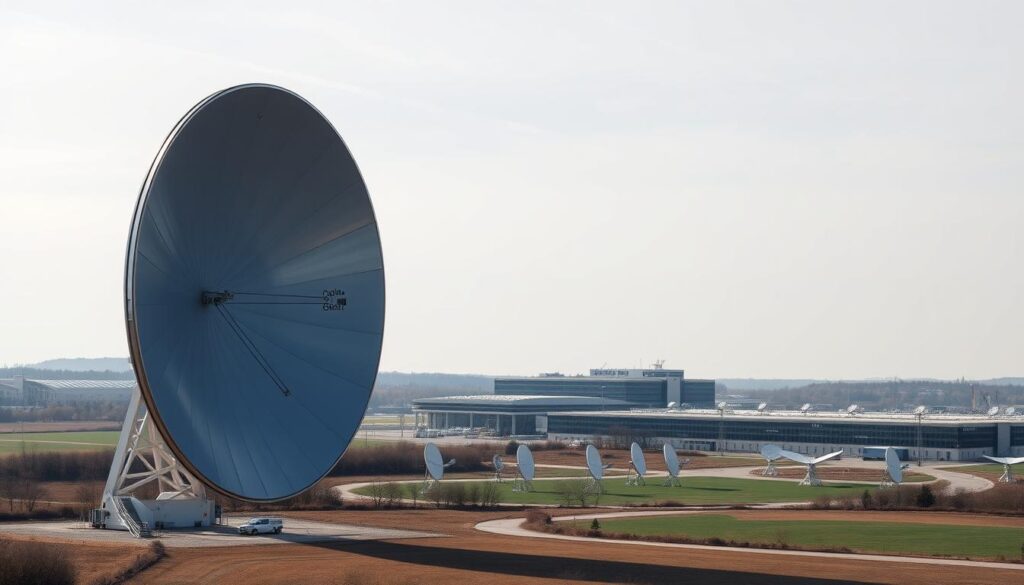
Other major integrators in Germany also contribute to the country’s robust ground station infrastructure, enhancing its capability to support a wide range of satellite missions. The presence of these integrators underscores Germany’s commitment to advancing satellite technology and its applications.
Düsseldorf Consulting GmbH: A Key Player
With its innovative approach and commitment to excellence, Düsseldorf Consulting GmbH has established itself as a leader in the German satellite communications sector. The company’s motto, “ACTA NON VERBA!” or “Deeds, not words!” reflects its proactive and results-driven approach to business.
Company Overview
Düsseldorf Consulting GmbH is a specialized consulting firm that provides expert advice and services to the satellite communications industry. With a deep understanding of the complex dynamics at play in this sector, the company offers tailored solutions to meet the unique needs of its clients.
The company’s team comprises experienced professionals with a strong background in satellite communications, ensuring that clients receive high-quality, informed guidance. This expertise is crucial in navigating the challenges and opportunities present in the German satellite communications market.
Services Offered
Düsseldorf Consulting GmbH offers a comprehensive range of services designed to support the satellite communications industry. These services include:
- Strategic consulting for satellite operators and ground station integrators
- Market analysis and research services
- Technical consulting and optimization of satellite communications systems
- Support with regulatory compliance and licensing procedures
The company’s ability to provide a broad spectrum of services makes it a one-stop-shop for clients seeking to navigate the complexities of the satellite communications industry.
Strategic Partnerships
Düsseldorf Consulting GmbH has established strategic partnerships with key players in the satellite communications sector. These partnerships enable the company to stay at the forefront of industry developments and provide its clients with access to the latest technologies and innovations.
| Partner | Description | Benefits |
|---|---|---|
| SES S.A. | Leading global satellite operator | Access to advanced satellite technology |
| Eutelsat Communications | European satellite operator | Enhanced coverage and capacity |
| Intelsat S.A. | Global satellite communications provider | Comprehensive satellite services |
Through these partnerships, Düsseldorf Consulting GmbH is able to offer its clients a robust and reliable solution that meets their satellite communications needs.
In conclusion, Düsseldorf Consulting GmbH is a pivotal entity in the German satellite communications industry, offering a range of services and strategic partnerships that support the growth and development of this sector.
Collaborations in the Satellite Sector
Collaborations are playing a crucial role in the development of the satellite industry in Germany. The satellite sector is complex and requires significant investment in technology and infrastructure. By working together, satellite communication companies in Germany can share resources, reduce costs, and drive innovation.
One of the key areas where collaborations are making an impact is in public-private partnerships. These partnerships bring together government agencies and private companies to work on joint projects, leveraging the strengths of both sectors.
Public-Private Partnerships
Public-private partnerships are essential for advancing satellite technology and services in Germany. They enable the development of new infrastructure, improve the efficiency of satellite operations, and facilitate the launch of new services. For instance, collaborations between telecommunications companies in Germany and government agencies have led to the development of advanced ground stations and communication networks.
- Enhanced infrastructure development
- Increased efficiency in satellite operations
- Launch of new satellite-based services
International Collaborations
International collaborations are also vital for the growth of the satellite sector in Germany. By partnering with international companies, German satellite operators can access new markets, technologies, and expertise. This not only benefits the companies involved but also contributes to the overall growth of the global satellite industry.
Key benefits of international collaborations include:
- Access to new markets and customer bases
- Acquisition of new technologies and expertise
- Enhanced global competitiveness
In conclusion, collaborations in the satellite sector, including public-private partnerships and international collaborations, are driving the growth and innovation of the industry in Germany. As the demand for satellite services continues to rise, the importance of these collaborations will only continue to grow.
Innovations in Satellite Technology
Innovations in satellite technology are paving the way for enhanced services and efficiency in Germany’s satellite sector. The integration of cutting-edge technologies is transforming the way satellite operators and service providers function, enabling them to offer more reliable and high-quality services.
Emerging Trends in Satellite Communications
The satellite communications landscape is witnessing significant advancements, driven by emerging trends such as the use of high-throughput satellites (HTS) and the adoption of very high frequency (VHF) and ultra high frequency (UHF) bands. These trends are enhancing the capacity and efficiency of satellite communications, allowing for faster data transfer rates and more reliable connectivity.
High-throughput satellites are particularly noteworthy, as they enable satellite technology providers in Germany to offer high-speed internet and data services to remote and underserved areas. This development is crucial for bridging the digital divide and supporting economic growth in these regions.

Role of AI and Machine Learning
Artificial intelligence (AI) and machine learning (ML) are playing an increasingly important role in the satellite industry, enhancing operational efficiency and service quality. AI and ML algorithms can be used to predict and prevent satellite failures, optimize satellite orbits, and improve the accuracy of satellite data.
For instance, predictive maintenance powered by AI can help satellite operators in Germany anticipate and mitigate potential issues before they occur, reducing downtime and improving overall service reliability. Moreover, AI-driven analytics can provide valuable insights into satellite performance, enabling data-driven decision-making.
- Enhanced predictive maintenance
- Optimized satellite orbits
- Improved data accuracy
By embracing these innovations, satellite technology providers in Germany can stay ahead of the curve, offering advanced satellite services that meet the evolving needs of their customers.
Regulatory Framework for Satellite Operations
Satellite operations in Germany are regulated through a structured framework that encompasses licensing, compliance, and strategic space policies. This framework is crucial for ensuring that satellite communications operate efficiently and safely within the country’s jurisdiction.
German Space Strategy
The German Space Strategy outlines the country’s approach to space exploration and utilization, providing a roadmap for the development of the satellite communications industry. It emphasizes the importance of innovation, international cooperation, and regulatory compliance.
Key components of the German Space Strategy include:
- Promoting the use of space technologies for societal benefits
- Fostering international collaborations in space exploration
- Ensuring a competitive and innovative space industry
Compliance and Licensing Requirements
Satellite operators in Germany must comply with stringent licensing requirements to ensure that their operations do not interfere with other satellite systems or terrestrial communications. The regulatory framework includes:
- Obtaining licenses for satellite operations from the relevant German authorities
- Adhering to technical standards for satellite systems
- Complying with international regulations, such as those set by the International Telecommunication Union (ITU)
The compliance process involves regular monitoring and reporting to ensure that satellite operators adhere to the established regulations.
The regulatory framework for satellite operations in Germany is designed to support the growth of the satellite communications industry while ensuring safe and efficient operations. By complying with the German Space Strategy and licensing requirements, satellite operators can contribute to the country’s technological advancements and economic development.
Economic Impact of Satellite Operators
Satellite communication companies in Germany are pivotal in driving economic growth through their advanced services. These companies contribute to the economy in various ways, including through the provision of telecommunications services, data transmission, and broadcasting.
Contribution to the German Economy
The presence of satellite operators in Germany significantly contributes to the country’s economy. Telecommunications companies in Germany, including satellite operators, generate revenue through various services such as television broadcasting, internet connectivity, and mobile communications. According to recent studies, the satellite industry contributes billions of euros to the German GDP annually.
Moreover, the satellite sector stimulates economic growth by enabling other industries to operate more efficiently. For instance, satellite communications facilitate navigation and weather forecasting, which are crucial for sectors like aviation, maritime, and agriculture.
Job Creation in the Satellite Industry
The satellite industry is also a significant source of employment in Germany. Satellite communication companies employ a wide range of professionals, from engineers and technicians to sales and marketing personnel. The industry supports both direct and indirect job creation, with many businesses relying on satellite services to operate.
Furthermore, the presence of global satellite operators in Germany fosters innovation and research, leading to the creation of highly skilled jobs. As the demand for satellite-based services continues to grow, so does the need for skilled professionals in this field.
In conclusion, satellite communication companies in Germany play a vital role in the country’s economy, contributing to GDP and creating employment opportunities. As the industry continues to evolve, its economic impact is likely to grow, further solidifying its importance in the German economy.
Future Prospects for Satellite Operations in Germany
The future of satellite operations in Germany is poised for significant growth, driven by technological advancements, evolving market demands, and regulatory developments. As a hub for satellite technology providers in Germany, the country is expected to witness increased adoption of satellite services across various industries.
Challenges and Opportunities
Despite the growth prospects, satellite operators in Germany will face challenges such as spectrum allocation, regulatory compliance, and intense competition. However, these challenges also present opportunities for innovation and collaboration among ground station solutions Germany providers.
Emerging Trends
Emerging trends such as the use of artificial intelligence and machine learning in satellite operations are expected to drive efficiency and reduce costs. As the demand for satellite-based services continues to grow, Germany is well-positioned to capitalize on these trends, given its strong infrastructure and expertise in satellite technology.
With the right regulatory framework and investments in infrastructure, Germany can continue to be a leader in the satellite industry, providing cutting-edge satellite technology providers Germany and ground station solutions to the world.