


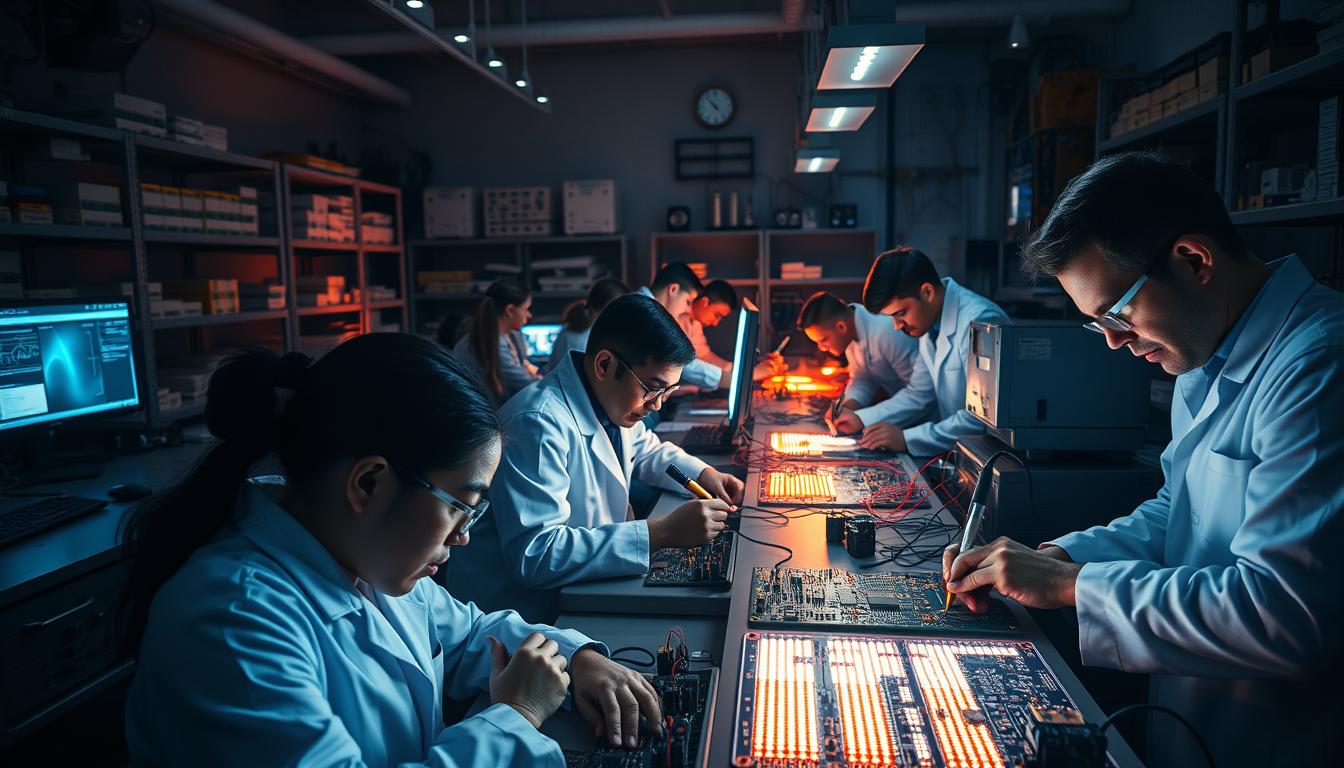

The development of high-temperature electronic circuits is crucial for various industries, including automotive, aerospace, and energy. These circuits are designed to operate reliably under extreme temperatures, making them essential for applications where standard electronics would fail.
Germany is at the forefront of this technology, with institutions like Fraunhofer IISB leading the research and development. The country’s expertise in electronic component manufacturing and circuit board design positions it as a hub for high-temperature resistant electronic circuit developers.
The importance of these circuits cannot be overstated, as they enable the creation of more efficient and reliable systems. As technology advances, the demand for such circuits is expected to grow, further solidifying Germany’s role in this field.
Key Takeaways
- High-temperature electronic circuits are vital for industries like automotive, aerospace, and energy.
- Germany leads in the development of these circuits, driven by institutions like Fraunhofer IISB.
- The country’s expertise in electronic component manufacturing and circuit board design is a significant advantage.
- These circuits enable more efficient and reliable systems under extreme temperatures.
- The demand for high-temperature electronic circuits is expected to grow with advancing technology.
Overview of High-Temperature Electronics
High-temperature electronics are designed to operate effectively in conditions where standard electronics would fail. These electronics are crucial for various industries, including aerospace, automotive, and oil and gas, where devices are often exposed to extreme temperatures.
Definition and Importance
High-temperature electronics refer to electronic components and systems that can function reliably in high-temperature environments. The importance of these electronics lies in their ability to withstand harsh conditions, thereby ensuring the continuity of operations in critical applications. For instance, in the automotive industry, high-temperature electronics are used in engine control units and sensors that monitor engine performance.
The development of high-temperature electronics involves advanced materials and designs that can resist thermal degradation. Reliability engineering solutions play a vital role in ensuring that these electronics meet the required standards for performance and durability.
Applications in Industry
High-temperature electronics have a wide range of applications across various industries. In the aerospace sector, these electronics are used in aircraft engines and other critical systems that are exposed to high temperatures. The oil and gas industry also relies on high-temperature electronics for drilling and extraction operations.
In Germany, institutions like Fraunhofer IISB are at the forefront of developing heat-resistant electronic devices. Their work on Silicon Carbide (SiC) technology is particularly noteworthy, as it enables the creation of high-voltage and high-power electronic devices that can operate in extreme conditions.
Electronic engineering services are essential for designing and implementing high-temperature electronics. These services involve the development of custom electronic components and systems that can meet the specific requirements of various industries.
Key Challenges in High-Temperature Circuit Design
Thermal management experts in Germany face numerous challenges when designing high-temperature electronic circuits. The German electronics industry demands high precision and reliability, making the development of advanced electronic solutions critical.
The primary challenges in high-temperature circuit design can be categorized into three main areas: thermal stability, material selection, and reliability concerns.
Thermal Stability
Maintaining thermal stability is crucial in high-temperature circuit design. As temperatures rise, the performance and lifespan of electronic components can be significantly affected. Thermal management techniques are employed to mitigate these effects, ensuring that circuits operate within a stable temperature range.
- Effective heat dissipation methods are critical.
- Thermal interface materials play a significant role in enhancing thermal conductivity.
- Designing circuits with thermal stability in mind is essential for reliability.
Material Selection
The choice of materials is vital in high-temperature electronics. Silicon Carbide (SiC) is a prominent material due to its outstanding properties, including high thermal conductivity and resistance to high temperatures.
Other materials like Gallium Nitride (GaN) are also being explored for their potential in high-temperature applications. The selection of appropriate materials directly impacts the performance and reliability of high-temperature circuits.
| Material | Thermal Conductivity | High-Temperature Resistance |
|---|---|---|
| Silicon Carbide (SiC) | High | Excellent |
| Gallium Nitride (GaN) | High | Good |
Reliability Concerns
Reliability is a significant concern in high-temperature circuit design. The harsh operating conditions can lead to component failure and reduced lifespan. Ensuring the reliability of high-temperature circuits involves rigorous testing and validation processes.
- High-temperature stress testing is conducted to evaluate component durability.
- Reliability modeling helps predict potential failure points.
- Redundancy in circuit design can enhance overall reliability.
In conclusion, addressing the challenges in high-temperature circuit design requires a comprehensive approach, focusing on thermal stability, material selection, and reliability. By leveraging advanced electronic solutions and expertise from the German electronics industry, it is possible to develop robust and reliable high-temperature electronics.
Leading High-Temperature Electronics Developers in Germany
High-temperature electronics is a thriving field in Germany, thanks to the contributions of key industry players. The country’s strong focus on research and development has enabled the growth of a robust ecosystem for high-temperature electronics.
Company Profiles
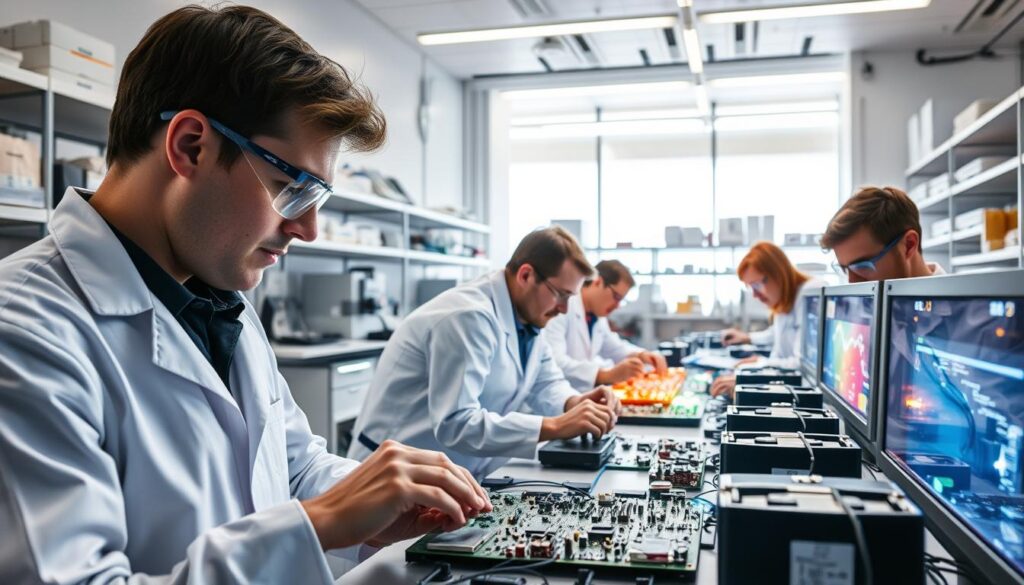
Germany is home to several leading technology companies and research institutions that are pioneering advancements in high-temperature electronics. One such institution is the Fraunhofer IISB, which is renowned for its work on SiC (Silicon Carbide) technology. Fraunhofer IISB’s contributions to the development of high-temperature electronics have been significant, particularly in enhancing the reliability and efficiency of electronic components.
Other notable companies in Germany are also making significant strides in this field. For instance, companies like Infineon Technologies and Siemens are leveraging their expertise in semiconductor technology to develop innovative high-temperature electronics solutions.
“The development of high-temperature electronics is crucial for various industries, including automotive, aerospace, and energy. Germany’s strong research infrastructure and industry expertise position it well to lead in this technological advancement.” – Expert in High-Temperature Electronics
Areas of Expertise
The leading high-temperature electronics developers in Germany have diverse areas of expertise. These include:
- Development of SiC and GaN (Gallium Nitride) technologies for high-temperature applications.
- Design and manufacturing of high-temperature electronic components and systems.
- Research into new materials and technologies that can withstand extreme temperatures.
The expertise of these companies and research institutions is not only advancing the field of high-temperature electronics but also driving innovation across various industries. As the demand for high-temperature electronics continues to grow, Germany is well-positioned to remain at the forefront of this technological development.
Innovations in High-Temperature Electronics
Recent breakthroughs in high-temperature electronics are transforming industries that require robust electronic systems. The push for more advanced electronic solutions has led to significant innovations in this field.
Recent Technological Advancements
The development of Silicon Carbide (SiC) technology has been a game-changer in high-temperature electronics. Improvements in epitaxy processes and device fabrication have enhanced the performance and reliability of SiC devices. These advancements are crucial for applications in extreme environments.
Reliability engineering solutions have also seen significant progress, with a focus on improving the lifespan and durability of high-temperature electronic components. This involves rigorous testing and validation processes to ensure that these components can withstand harsh conditions.
Collaboration with Research Institutions
Collaboration between industry leaders and research institutions has been instrumental in driving innovations in high-temperature electronics. Joint research projects have led to the development of new materials and technologies that are more efficient and reliable.
These collaborations not only advance the state-of-the-art in high-temperature electronics but also facilitate the transfer of knowledge and technology to practical applications. As a result, industries such as aerospace, automotive, and oil & gas are benefiting from more robust electronic systems.
Materials Used in High-Temperature Circuitry
The performance of high-temperature circuits is significantly influenced by the materials selected for their construction. Electronic component manufacturers are continually seeking materials that can enhance the reliability and efficiency of heat-resistant electronic devices.
Several materials have emerged as particularly suitable for high-temperature applications. Silicon Carbide (SiC) is one such material, renowned for its excellent thermal stability and electrical properties. SiC is widely used in the production of high-temperature electronics due to its ability to operate effectively under extreme conditions.
Silicon Carbide
SiC offers several advantages, including high thermal conductivity, high power density, and excellent resistance to radiation. These properties make it an ideal material for use in high-temperature circuits, particularly in applications such as aerospace and defense.
Gallium Nitride
Gallium Nitride (GaN) is another material gaining prominence in high-temperature electronics. GaN-based devices are known for their high electron mobility and ability to operate at high voltages, making them suitable for a range of high-temperature applications.
Flexible Substrates
In addition to SiC and GaN, flexible substrates are being explored for their potential in high-temperature circuitry. These substrates offer the advantage of flexibility, allowing for the creation of complex circuit geometries that can be used in a variety of applications.
| Material | Thermal Conductivity | Electrical Properties | Applications |
|---|---|---|---|
| Silicon Carbide (SiC) | High | Excellent | Aerospace, Defense, Automotive |
| Gallium Nitride (GaN) | High | High Electron Mobility | High-Power Applications, RF Devices |
| Flexible Substrates | Variable | Flexible Circuitry | Wearable Electronics, Complex Geometries |
The selection of materials for high-temperature circuitry is a critical aspect of designing reliable and efficient electronic systems. As technology continues to evolve, the development of new materials and the improvement of existing ones will play a crucial role in advancing the field of high-temperature electronics.
Testing and Quality Assurance Standards in Germany
Ensuring the reliability of high-temperature electronics is a top priority in Germany, achieved through comprehensive testing and quality assurance standards. The German electronics industry is known for its rigorous approach to testing, which is crucial for the development of reliable high-temperature electronic circuits.
Industry Certifications
Industry certifications play a vital role in ensuring that high-temperature electronics meet the required standards. In Germany, certifications such as those provided by the Deutsches Institut für Normung (DIN) are highly regarded. These certifications cover various aspects of electronic components, including their performance under high-temperature conditions.
- Certification processes involve thorough testing of materials and components.
- Standards are regularly updated to reflect the latest technological advancements.
- Certification is often a prerequisite for companies looking to supply their components to major industries.
Testing Procedures
Testing procedures for high-temperature electronics in Germany are highly sophisticated. Institutions like the Fraunhofer IISB conduct rigorous testing, including characterization and reliability testing of SiC devices. These tests are designed to push components to their limits, ensuring they can perform under extreme conditions.
- High-temperature storage tests to evaluate component durability.
- Power cycling tests to assess the performance of components under varying loads.
- Reliability testing to identify potential failure modes.
The emphasis on testing and quality assurance not only enhances the reliability of high-temperature electronics but also contributes to Germany’s reputation as a leader in the electronics industry. By adhering to stringent standards, German companies can ensure their products meet the highest levels of quality and performance.
The Role of Government and Regulations
Government backing and regulatory frameworks are essential for the innovation and deployment of high-temperature electronics in Germany. The country’s technology companies are at the forefront of developing these advanced electronics, driven by government initiatives and funding.
Support for Electronic Development
The German government has been proactive in supporting the development of high-temperature electronics through various projects. For instance, the TRANSFORM project for SiC (Silicon Carbide) technology has received significant funding, enabling advancements in this field. Such initiatives not only foster innovation but also position Germany as a leader in electronic engineering services.
Key Areas of Government Support:
- Funding for research and development projects
- Collaboration with research institutions
- Promotion of technology transfer
Compliance with Safety Standards
While government support is crucial, compliance with safety standards is equally important. High-temperature electronics must adhere to stringent safety regulations to ensure their safe deployment in various industries. This includes compliance with European Union directives and German national standards.
| Safety Standard | Description | Industry Impact |
|---|---|---|
| CE Marking | Compliance with EU health, safety, and environmental regulations | Ensures market access within the EU |
| ISO 9001 | Quality management system standard | Enhances customer satisfaction and product reliability |
The interplay between government support and regulatory compliance is crucial for the sustainable growth of the high-temperature electronics sector in Germany.
Market Trends for High-Temperature Electronics
The demand for advanced electronic solutions that can withstand extreme temperatures is on the rise, fueling market expansion. High-temperature electronics play a crucial role in various industries, including automotive, aerospace, and energy.
Growth Sectors
Several sectors are driving the growth of the high-temperature electronics market. The automotive industry, for instance, is increasingly adopting heat-resistant electronic devices for electric vehicles and autonomous driving technologies.
- Aerospace and Defense: High-temperature electronics are used in aircraft and missile systems.
- Automotive: Applications include engine control units and sensors.
- Energy: High-temperature electronics are crucial for geothermal and oil & gas exploration.
Future Projections
The market for high-temperature electronics is expected to continue growing as technology advances. Future projections indicate an increased adoption of silicon carbide and gallium nitride materials due to their superior thermal stability.
| Industry | 2023 Market Share | 2028 Projected Market Share |
|---|---|---|
| Aerospace and Defense | 25% | 30% |
| Automotive | 30% | 35% |
| Energy | 20% | 25% |
As the demand for high-temperature electronics continues to rise, manufacturers are investing in research and development to improve the performance and reliability of these devices. The integration of IoT technologies with high-temperature electronics is also expected to open new avenues for growth.
Integration of IoT with High-Temperature Electronics
IoT integration is enhancing the functionality of high-temperature electronic devices, making them more reliable and efficient. This integration enables real-time monitoring and control in extreme conditions, which is crucial for industries such as aerospace, automotive, and oil and gas.
The benefits of IoT in extreme conditions are multifaceted. It allows for the collection of real-time data, predictive maintenance, and enhanced operational efficiency. For instance, in high-temperature environments, IoT sensors can monitor the condition of equipment, predict potential failures, and thus reduce downtime.
Benefits of IoT in Extreme Conditions
The integration of IoT with high-temperature electronics offers several key benefits:
- Enhanced Monitoring: Real-time monitoring capabilities allow for immediate response to changes in operating conditions.
- Predictive Maintenance: IoT sensors can predict when maintenance is required, reducing unexpected failures.
- Operational Efficiency: By continuously monitoring and adjusting operations, IoT integration can lead to significant efficiency gains.
As noted by industry experts, “The use of IoT in high-temperature electronics is a significant step forward in terms of reliability and efficiency.” This underscores the potential of IoT to transform industries that operate in extreme conditions.
Case Studies
Several companies have successfully integrated IoT with high-temperature electronics. For example, in the oil and gas industry, IoT-enabled sensors are used to monitor equipment in high-temperature environments, improving safety and reducing maintenance costs.
Another case study involves an aerospace company that implemented IoT solutions for real-time monitoring of aircraft engines. This not only improved safety but also enhanced the overall efficiency of their operations.
These case studies demonstrate the potential of IoT integration in high-temperature electronics to drive significant improvements in various industries.
Applications of High-Temperature Circuits in Various Industries
Germany’s electronics industry is at the forefront of developing high-temperature circuits for diverse applications. These circuits are designed to operate reliably in extreme temperatures, making them crucial for various industries that involve harsh environments.
Aerospace and Defense
In the aerospace and defense sectors, high-temperature electronics are used in aviation electronics and military equipment. They are essential for the operation of aircraft engines, missiles, and other defense systems where temperature resilience is critical.
- Enhanced reliability in extreme temperatures
- Improved performance under harsh conditions
- Reduced maintenance costs due to increased durability
Automotive
The automotive industry benefits significantly from high-temperature electronics, particularly in the development of electric vehicles (EVs) and advanced driver-assistance systems (ADAS). These components are used in engine control units, battery management systems, and other critical applications.
- Increased efficiency in engine management
- Enhanced safety features through reliable electronics
- Better performance in extreme weather conditions
Oil and Gas
In the oil and gas industry, high-temperature electronics are vital for downhole drilling and exploration equipment. They enable the operation of sensors and control systems in the harsh environments encountered during drilling and extraction processes.
“The use of high-temperature electronics in downhole applications has revolutionized the oil and gas industry by providing more reliable and efficient operations.”
As industries continue to push the boundaries of technology and operation in harsh environments, the demand for high-temperature circuits is expected to grow, driven by advancements in the German electronics industry.
Future Outlook for High-Temperature Circuit Development
The future of high-temperature electronics is poised for significant advancements, driven by emerging technologies such as quantum computing and advanced Silicon Carbide (SiC) devices. Technology companies in Germany are at the forefront of these developments, pushing the boundaries of what is possible in extreme environments.
Emerging Technologies
Quantum computing, with its potential for high-speed processing, is expected to play a crucial role in the development of high-temperature electronics. Advanced SiC devices, known for their durability and efficiency, will continue to be integral in applications where reliability is paramount. These technologies will enable the creation of more sophisticated advanced electronic solutions.
Long-term Industry Impact
The long-term impact of these emerging technologies on the industry will be substantial. As high-temperature electronics continue to evolve, we can expect to see widespread adoption across various sectors, including aerospace, automotive, and oil and gas. German technology companies are well-positioned to lead this charge, driving innovation and delivering cutting-edge solutions.
FAQ
What are high-temperature electronics, and why are they important?
High-temperature electronics refer to electronic components and systems designed to operate reliably in extreme temperature conditions. They are crucial for applications in industries such as aerospace, automotive, and oil and gas, where standard electronics would fail.
What are the key challenges in designing high-temperature circuits?
The main challenges include maintaining thermal stability, selecting materials that can withstand high temperatures, and ensuring the reliability of the electronic components and systems.
Which materials are commonly used in high-temperature circuitry?
Silicon Carbide (SiC), Gallium Nitride (GaN), and flexible substrates are among the materials used due to their ability to withstand high temperatures and maintain their electrical properties.
How do German companies contribute to the development of high-temperature electronics?
Companies like Fraunhofer IISB are at the forefront of developing high-temperature electronics, with expertise in areas such as power electronics and thermal management, driving innovation in the field.
What role does the government play in supporting high-temperature electronics development?
The German government supports the development of high-temperature electronics through funding for research and development projects, and by establishing regulatory frameworks that encourage innovation while ensuring safety and compliance.
What are the benefits of integrating IoT with high-temperature electronics?
Integrating IoT with high-temperature electronics enables real-time monitoring and control, enhancing the functionality and reliability of electronic devices in extreme conditions, and opening up new applications.
What are the future projections for the market of high-temperature electronics?
The market for high-temperature electronics is expected to grow, driven by increasing demand from industries such as aerospace, automotive, and oil and gas, with advancements in technology and materials further expanding potential applications.
How do testing and quality assurance standards impact the reliability of high-temperature electronics?
Stringent testing and quality assurance standards, including industry certifications and specific testing procedures, are crucial for ensuring the reliability and performance of high-temperature electronic devices.
What emerging technologies are expected to impact the future of high-temperature circuit development?
Advances in materials science, such as new semiconductor materials, and technologies like 3D printing, are expected to drive future developments in high-temperature electronics, enabling more efficient and reliable devices.
What are the applications of high-temperature circuits in the aerospace industry?
High-temperature electronics are used in aerospace for applications such as engine control systems, where they must withstand extreme temperatures, enhancing the performance and reliability of aircraft engines.