


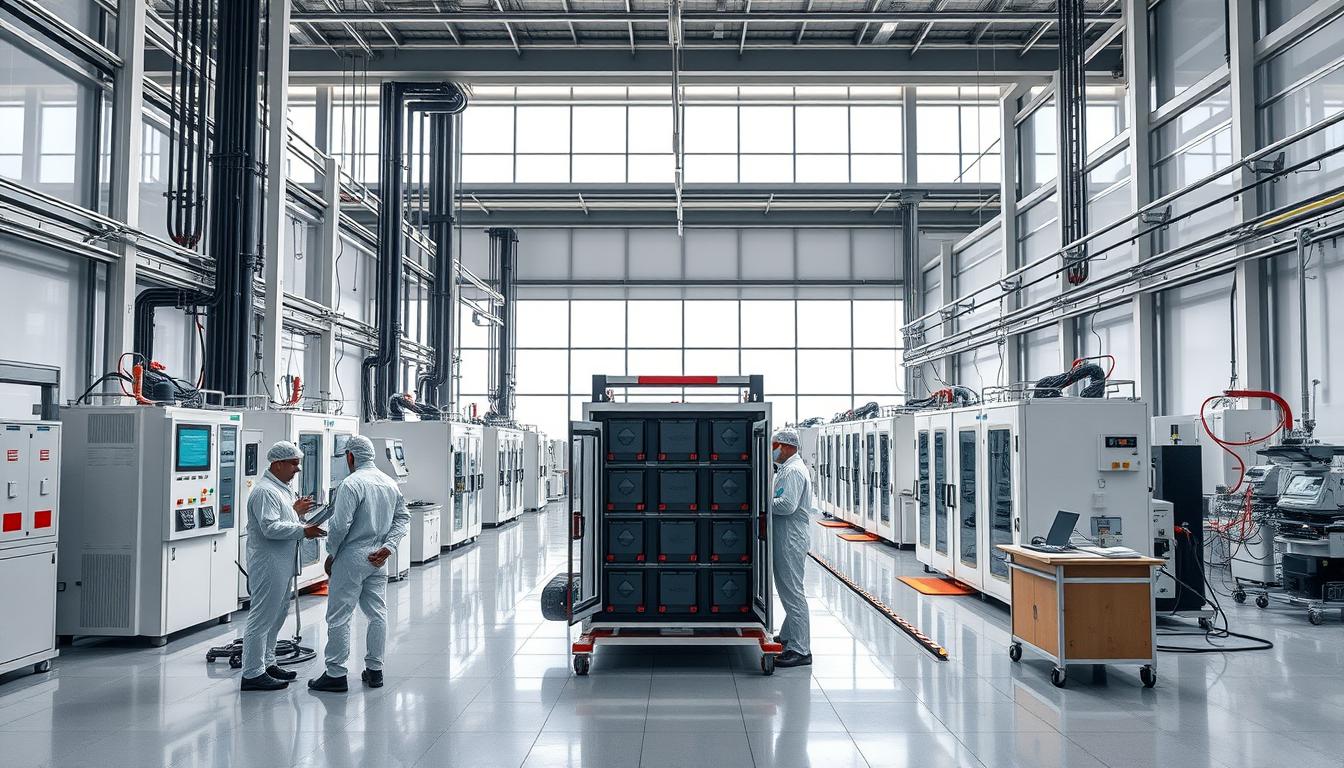

Ensuring the safety and reliability of batteries used in electric vehicles is crucial, and Düsseldorf Consulting GmbH is at the forefront of providing comprehensive high-voltage battery testing services in Germany.
With a strong commitment to safety and compliance, as reflected in its motto “ACTA NON VERBA!“, the company based at Königsallee 22, 40212 Düsseldorf, is a trusted partner for businesses seeking rigorous testing and certification services.
The importance of these services cannot be overstated, as they play a critical role in the development and deployment of electric vehicles and other applications.
Key Takeaways
- Reliable high-voltage battery testing is essential for electric vehicle safety.
- Düsseldorf Consulting GmbH is a leading provider of comprehensive testing services in Germany.
- The company’s commitment to safety and compliance is reflected in its motto “ACTA NON VERBA!”.
- Comprehensive testing services are crucial for the development and deployment of electric vehicles.
- Businesses trust Düsseldorf Consulting GmbH for rigorous testing and certification services.
Introduction to High-Voltage Battery Testing
With the rise of electric vehicles and energy storage systems, high-voltage battery testing has emerged as a crucial step in the development and deployment of battery technologies. High-voltage batteries are used in a variety of applications, including electric vehicles, renewable energy systems, and industrial power supplies.
Importance of Testing for Safety and Performance
High-voltage battery testing is essential for validating the safety and performance of batteries. According to Kiwa, battery certification is vital to guarantee the safety and reliability of batteries used in diverse products and devices. Compliance with recognized standards ensures batteries fulfill safety requirements. Companies specializing in EV battery testing in Germany, such as Kiwa, play a crucial role in providing testing and certification services.
The testing process involves evaluating the battery’s performance under various conditions, including extreme temperatures, overcharging, and mechanical stress. This helps to identify potential risks and ensures that the batteries meet the required safety standards.
Overview of High-Voltage Battery Applications
High-voltage batteries are used in a range of applications, including electric vehicles, renewable energy systems, and industrial power supplies. The growing demand for electric vehicles has driven the need for advanced battery technologies, with a focus on safety, efficiency, and performance. Lithium-ion battery safety testing is critical in this context, as it ensures that batteries used in these applications meet stringent safety standards.
In Germany, companies like Kiwa offer comprehensive testing services for high-voltage batteries, including Lithium-ion batteries. These services are designed to ensure that batteries meet the required safety and performance standards, supporting the development of reliable and efficient battery technologies.
Overview of High-Voltage Battery Testing and Safety
In Germany, comprehensive high-voltage battery testing services are crucial for the development and validation of electric vehicle batteries. Ensuring the safety and performance of these batteries is paramount, given their critical role in the electric vehicle (EV) industry.
Key Testing Procedures
High-voltage battery testing involves a series of rigorous procedures designed to assess the safety, performance, and durability of EV batteries. Companies like DEKRA offer a range of testing services, including:
- Development support testing
- Validation testing
- Certification testing
These tests are conducted under various conditions to simulate real-world scenarios, ensuring that batteries can withstand different environmental and operational stresses.
Safety Standards and Regulations in Germany
Germany has stringent safety standards and regulations for high-voltage battery testing, governed by various national and international bodies. Compliance with these regulations is essential for manufacturers to ensure their batteries are safe for use in electric vehicles.
The key safety standards include:
| Standard | Description |
|---|---|
| ECE R100 | Regulation for the approval of vehicles with regard to specific requirements for the electric power train |
| IEC 62133 | Safety requirements for portable sealed secondary cells, and for batteries made from them, for use in portable applications |
Companies providing high-voltage battery testing services in Germany, such as DEKRA’s Battery Test Center in Klettwitz, play a vital role in helping manufacturers comply with these safety standards and regulations.
By adhering to these standards and undergoing rigorous testing, manufacturers can ensure their batteries meet the required safety and performance criteria, thereby enhancing consumer trust and confidence in electric vehicles.
Düsseldorf Consulting GmbH: A Leader in the Field
Düsseldorf Consulting GmbH, located at Königsallee 22, 40212 Düsseldorf, is a prominent player in the high-voltage battery testing sector in Germany. With a strong commitment to safety and compliance, the company has established itself as a trusted partner for businesses involved in HV battery testing.
Background and Expertise
Düsseldorf Consulting GmbH boasts a team of experts with extensive experience in high-voltage battery testing. Their motto, ACTA NON VERBA, reflects their commitment to delivering high-quality services. The company’s expertise spans various aspects of HV battery testing, including safety standards and regulatory compliance.
Services Offered
The services offered by Düsseldorf Consulting GmbH include comprehensive testing and consulting for high-voltage batteries. Their services are designed to ensure the safety and performance of HV batteries, catering to the needs of manufacturers and other stakeholders in the industry.
Some of the key services provided by Düsseldorf Consulting GmbH are:
- High-voltage battery testing and certification
- Compliance with German and international safety standards
- Consulting on HV battery safety and performance
The company’s expertise and commitment to quality are reflected in the following table, which highlights some of the key aspects of their services:
| Service | Description | Benefits |
|---|---|---|
| HV Battery Testing | Comprehensive testing for high-voltage batteries | Ensures safety and performance |
| Certification | Certification according to German and international standards | Facilitates market access and compliance |
| Consulting | Expert advice on HV battery safety and performance | Enhances product reliability and customer trust |
Düsseldorf Consulting GmbH’s commitment to delivering high-quality services is unwavering. With their expertise and state-of-the-art facilities, they continue to be a leader in the field of HV battery testing in Germany.
Testing Methods Employed by Companies
High-voltage battery testing in Germany involves a combination of simulation, modeling, and real-world testing. This multifaceted approach ensures that batteries meet stringent safety and performance standards.
Simulation and Modeling Techniques
Companies like Intertek offer advanced simulation and modeling solutions for high-voltage batteries. These techniques allow for the prediction of battery performance under various conditions, reducing the need for physical prototypes and accelerating the development process.
Simulation and modeling enable the analysis of complex battery behaviors, such as thermal management and electrical performance. By leveraging these techniques, manufacturers can optimize battery design and improve overall efficiency.
Real-World Testing Scenarios
In addition to simulation and modeling, real-world testing is crucial for validating battery performance. Companies conduct a range of tests, including environmental testing, electrical testing, and mechanical testing, to ensure that batteries can withstand various operating conditions.
Real-world testing scenarios help identify potential issues that may not be apparent through simulation alone. By combining both approaches, companies can ensure that their high-voltage batteries meet the highest standards of safety and reliability, particularly for EV battery testing companies Germany and Lithium-ion battery safety testing Germany.
Certifications and Compliance for Testing Facilities
The credibility of battery testing services in Germany hinges on obtaining relevant certifications and complying with national safety standards. Testing facilities must adhere to a rigorous set of guidelines to ensure the safety and performance of high-voltage batteries.
ISO Certifications Relevant to Battery Testing
ISO certifications play a crucial role in validating the competence of testing facilities. For instance, Kiwa, a renowned testing company, holds accreditations from prestigious organizations such as DAkkS and IECEE CB. These certifications underscore Kiwa’s commitment to maintaining high standards in battery testing.
Key ISO certifications relevant to battery testing include:
- ISO/IEC 17025, which specifies the requirements for the competence of testing and calibration laboratories.
- ISO 9001, which focuses on quality management systems.
By obtaining these certifications, testing facilities demonstrate their ability to deliver reliable and accurate testing services, thereby enhancing customer trust.
Safety Regulations Specific to Germany
Germany has a robust framework of safety regulations that testing facilities must comply with. These regulations are designed to ensure the safe operation of testing facilities and the integrity of the testing processes.
Some of the key safety regulations include:
- The German Equipment Safety Act (Gerätesicherheitsgesetz), which mandates safety requirements for equipment used in testing.
- The Occupational Safety and Health Act (Arbeitsschutzgesetz), which focuses on ensuring a safe working environment.
By complying with these regulations, testing facilities in Germany can ensure a high level of safety and performance in their operations, supporting the development of reliable electric vehicle battery testing services.
Key Players in the High-Voltage Battery Testing Sector
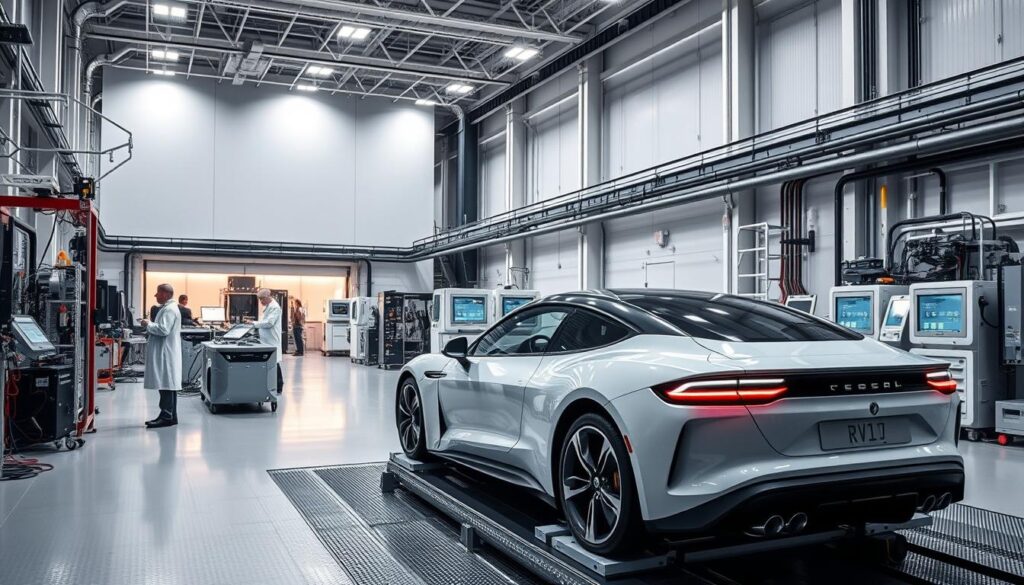
Companies like DEKRA, Kiwa, and Intertek are leading the way in high-voltage battery testing, providing crucial services to the industry. These companies have established themselves as key players in the high-voltage battery testing sector in Germany, offering a range of testing and certification services that are essential for ensuring the safety and performance of high-voltage batteries.
Comparison of Major Companies
The major companies in the high-voltage battery testing sector can be compared based on their service offerings, testing capabilities, and industry certifications. For instance, DEKRA is known for its comprehensive testing services, including simulation and modeling techniques, while Kiwa offers a wide range of certification services that cater to the specific needs of battery manufacturers.
Intertek, on the other hand, is recognized for its expertise in real-world testing scenarios, providing valuable insights into battery performance under various conditions. A comparison of these companies highlights their unique strengths and areas of specialization, helping manufacturers choose the most suitable testing partner for their needs.
Industry Trends Impacting Battery Testing
The high-voltage battery testing sector is influenced by several industry trends, including the increasing demand for electric vehicles (EVs) and the need for more stringent safety and performance standards. As the EV market continues to grow, companies are investing heavily in testing and certification services to ensure compliance with regulatory requirements.
Another significant trend is the adoption of advanced testing technologies, such as simulation and modeling, which enable more efficient and cost-effective testing processes. The industry is also witnessing a shift towards more sustainable testing practices, with companies exploring ways to reduce their environmental footprint.
- The rise of EVs is driving demand for high-voltage battery testing services.
- Companies are adopting advanced testing technologies to improve efficiency.
- Sustainability is becoming a key consideration in testing practices.
Importance of Reliable Testing for Manufacturers
The importance of reliable testing for manufacturers cannot be overstated, as it directly impacts the safety, performance, and overall quality of high-voltage batteries.
Reliable testing is crucial for ensuring that high-voltage batteries, particularly those used in electric vehicles, meet stringent safety and performance standards. According to Intertek, battery testing and certification services play a vital role in ensuring that energy storage technologies, including lithium-ion batteries, meet performance, reliability, and safety criteria.
Ensuring Product Safety and Reliability
Product safety and reliability are paramount for manufacturers of high-voltage batteries. Comprehensive testing helps identify potential failures and weaknesses, allowing manufacturers to rectify these issues before the products reach the market.
- Testing for electrical performance under various conditions
- Assessing durability and lifespan
- Evaluating safety under abuse conditions
By conducting thorough testing, manufacturers can ensure that their products are not only compliant with regulatory standards but also meet consumer expectations for safety and performance.
Impact on Consumer Trust and Brand Reputation
The impact of reliable testing on consumer trust and brand reputation is significant. Consumers are more likely to trust brands that demonstrate a commitment to safety and quality through rigorous testing and certification.
| Aspect | Impact of Reliable Testing |
|---|---|
| Consumer Trust | Increased trust due to demonstrated commitment to safety and quality |
| Brand Reputation | Enhanced reputation through adherence to high testing standards |
| Market Competitiveness | Improved competitiveness due to verified safety and performance |
In conclusion, reliable testing is essential for manufacturers of high-voltage batteries, not only for ensuring product safety and reliability but also for building consumer trust and maintaining a strong brand reputation.
Challenges in High-Voltage Battery Testing
High-voltage battery testing is critical for the automotive and energy sectors, yet it is beset by technical and regulatory challenges. The complexity of high-voltage battery systems demands rigorous testing to ensure safety and performance.
The technical and engineering challenges in high-voltage battery testing are multifaceted. One of the primary concerns is the accuracy and reliability of testing equipment. Advanced testing facilities must be equipped with state-of-the-art technology to simulate real-world conditions and stress tests.
Technical and Engineering Challenges
High-voltage batteries require sophisticated testing protocols to validate their performance under various conditions. This includes thermal testing, electrical testing, and mechanical testing. Ensuring that these tests are conducted accurately and efficiently is a significant challenge.
- Developing testing protocols that cover all possible scenarios
- Maintaining the precision of testing equipment over time
- Training personnel to handle complex testing procedures
Regulatory Challenges Facing the Industry
The regulatory landscape for high-voltage battery testing is becoming increasingly stringent. The EU’s proposed sustainable battery regulation sets new sustainability criteria for battery production, including raw material sourcing and end-of-life disposal. Companies must navigate these regulations while ensuring compliance.
Regulatory compliance is not just about meeting current standards but also anticipating future changes. For instance, the EU regulation aims to promote sustainability throughout the battery lifecycle, from production to disposal.
“The new regulations will require significant adjustments in how batteries are designed, produced, and recycled, impacting the entire supply chain.”
To address these challenges, companies like Düsseldorf Consulting GmbH play a crucial role in providing expertise and guidance on high-voltage battery testing and compliance with regulatory standards.
Emerging Technologies in Battery Testing
Innovations in testing equipment and methodologies are enhancing battery safety testing, a critical aspect for the electric vehicle (EV) industry, particularly in Germany.
Companies like Intertek are at the forefront, offering cutting-edge testing services including battery modeling and simulation solutions. These advancements are crucial for ensuring the safety and performance of lithium-ion batteries, which are ubiquitous in EVs.
Innovations in Testing Equipment
Modern testing equipment is becoming increasingly sophisticated, allowing for more precise and efficient testing of battery performance under various conditions. Advanced simulation tools enable the replication of real-world scenarios, reducing the need for physical prototypes and accelerating the development process.
A key innovation in this area is the development of more accurate and reliable battery testing protocols. This includes the use of advanced software for simulating battery behavior under different operating conditions, thereby enhancing the safety and reliability of battery systems.

Future Trends in Battery Safety Testing
Looking ahead, the integration of AI and machine learning in battery testing is expected to revolutionize the field. Predictive analytics will play a crucial role in identifying potential safety risks before they become critical, enabling proactive measures to ensure battery safety.
The table below summarizes some of the key emerging technologies and their potential impact on battery safety testing:
| Technology | Description | Impact on Safety Testing |
|---|---|---|
| Advanced Simulation Tools | Replicate real-world scenarios without physical prototypes | Enhanced accuracy and efficiency |
| AI and Machine Learning | Predictive analytics for potential safety risks | Proactive safety measures |
| Battery Modeling | Detailed modeling of battery behavior | Improved safety and performance |
As the demand for EVs continues to grow, the importance of robust battery safety testing cannot be overstated. Emerging technologies will be pivotal in shaping the future of the industry, particularly in regions like Germany, which is a hub for EV battery testing companies.
Case Studies of Successful Testing Projects
DEKRA’s Battery Test Center is a prime example of a facility that has successfully tested batteries for electric vehicles, underscoring the value of robust testing protocols. Their comprehensive testing services have ensured the safety and reliability of high-voltage batteries used in various electric vehicle models.
Examples of Successful Testing Initiatives
Several testing initiatives have been undertaken by prominent companies in Germany, showcasing the country’s commitment to excellence in electric vehicle battery testing. For instance, DEKRA’s Battery Test Center has conducted extensive tests on batteries for electric vehicles, verifying their performance under various conditions.
Another example is the testing services provided by Düsseldorf Consulting GmbH, which has worked with numerous clients to ensure their high-voltage batteries meet stringent safety and performance standards.
| Company | Testing Service | Outcome |
|---|---|---|
| DEKRA | Battery Performance Testing | Verified safety and reliability |
| Düsseldorf Consulting GmbH | Safety and Performance Testing | Ensured compliance with standards |
Lessons Learned from Case Studies
The case studies of successful testing projects reveal several key lessons. Firstly, the importance of rigorous testing cannot be overstated, as it directly impacts the safety and reliability of high-voltage batteries. Secondly, collaboration between testing facilities and manufacturers is crucial for identifying and addressing potential issues early in the development process.
Furthermore, the use of advanced testing technologies and methodologies has been shown to significantly enhance the efficiency and effectiveness of testing services. As the demand for electric vehicles continues to grow, the role of comprehensive testing services will become increasingly vital.
Conclusion: The Future of High-Voltage Battery Testing in Germany
The landscape of high-voltage (HV) battery testing in Germany is poised for significant advancements, driven by the growing demand for electric vehicles and renewable energy solutions. As a leader in the industry, Düsseldorf Consulting GmbH is at the forefront of shaping the future of HV battery testing.
Advancements in Testing Technologies
Emerging technologies and innovations in testing equipment are expected to play a crucial role in enhancing the safety and performance of HV batteries. Simulation and modeling techniques, alongside real-world testing scenarios, will continue to be pivotal in the development of more efficient and reliable battery systems.
Industry Leadership and Expertise
Düsseldorf Consulting GmbH, with its expertise and commitment to excellence, is well-positioned to drive these advancements. Located at Königsallee 22, 40212 Düsseldorf, the company embodies the principle of “ACTA NON VERBA” through its work in HV battery testing Germany, setting standards for the industry.
As the industry evolves, the role of Düsseldorf Consulting GmbH in advancing testing standards will be crucial. The company’s contributions will not only enhance the safety and reliability of HV battery systems but also foster consumer trust and brand reputation among manufacturers.