

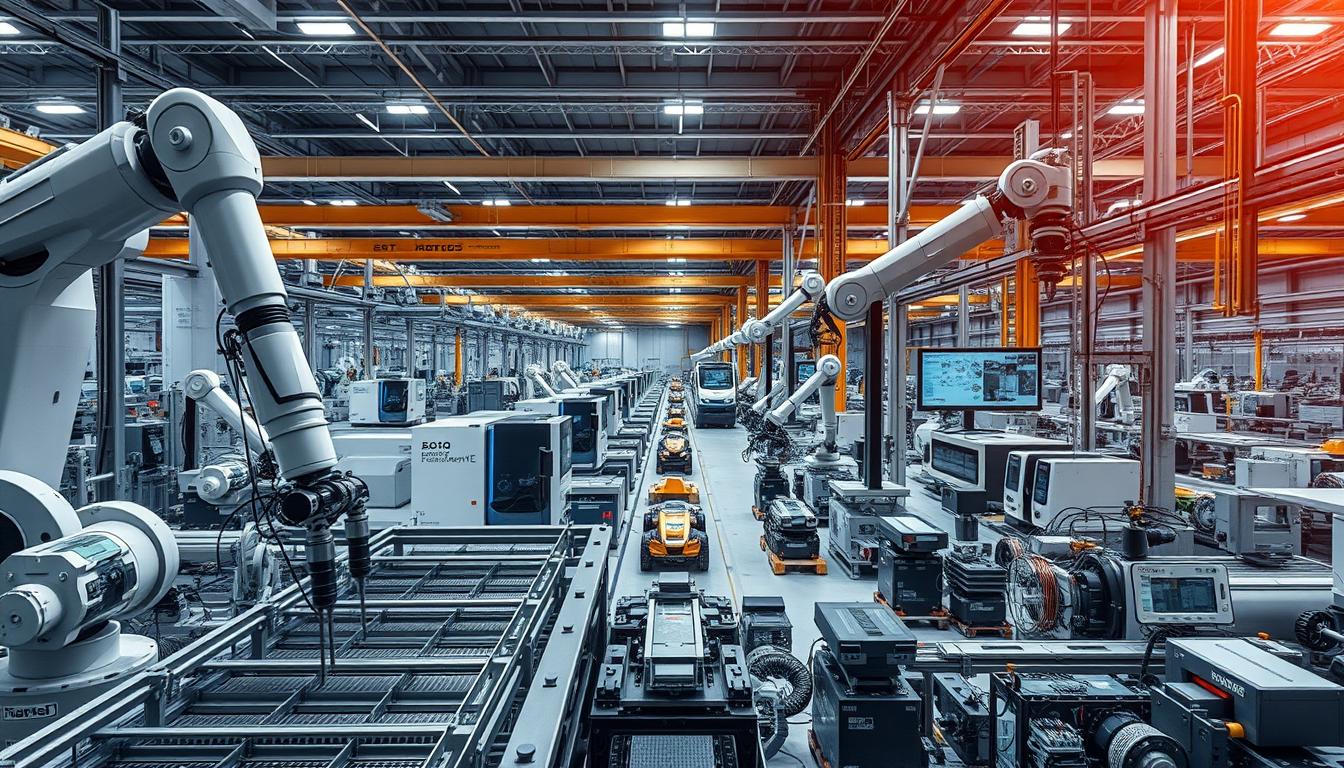

The robotics and automation industry is experiencing significant growth in Germany, driven by technological advancements and the adoption of Industry 4.0 principles.
Düsseldorf Consulting GmbH, located at Königsallee 22, 40212 Düsseldorf, plays a pivotal role in this sector, providing expert consulting services to enhance industrial automation and robotic technology.
The integration of smart technologies, such as AI and IoT, into manufacturing processes has positioned Germany’s Industrie 4.0 initiative as a global benchmark, emphasizing innovation and public-private partnerships.
Key Takeaways
- Germany’s robotics and automation industry is driven by Industry 4.0 principles.
- Düsseldorf Consulting GmbH provides expert services in industrial automation.
- The industry is characterized by the integration of AI, IoT, and advanced data analytics.
- Industrie 4.0 is a global benchmark for industrial innovation.
- Public-private partnerships are crucial for the industry’s growth.
Overview of the Robotics and Automation Industry in Germany
With the advent of Industry 4.0, Germany’s robotics and automation industry has seen a paradigm shift. The integration of AI, IoT, and robotics has transformed manufacturing processes, making them more efficient and interconnected.
The German manufacturing robotics sector has a rich history, dating back to the early adoption of automation technologies. Over the years, it has evolved to incorporate advanced robotics and automation solutions, becoming a cornerstone of the country’s industrial prowess.
Key Concepts and Technologies
Industry 4.0 has been a driving force behind the modernization of manufacturing processes. It encompasses a range of technologies including artificial intelligence (AI), Internet of Things (IoT), and robotics. These technologies enable the creation of smart factories where production is highly flexible and efficient.
The current market landscape in Germany is characterized by a high demand for automation solutions. Companies are increasingly adopting robotics and automation to enhance productivity and competitiveness.
| Industry | Application of Robotics | Benefits |
|---|---|---|
| Automotive | Welding, Assembly | Increased Precision, Reduced Labor Costs |
| Electronics | Assembly, Inspection | Enhanced Quality Control, Improved Efficiency |
| Pharmaceuticals | Packaging, Material Handling | Compliance with Regulations, Reduced Contamination Risk |
The future of the robotics and automation industry in Germany looks promising, with continued investment in Industry 4.0 technologies expected to drive further innovation and growth.
Major Players in the German Robotics Sector
Leading the way in Germany’s robotics and automation sector are established companies and innovative startups. The German robotics industry is characterized by the presence of leading companies like Siemens and Bosch, which are driving innovation in automation. These companies are at the forefront of developing automated production systems that are efficient, flexible, and highly sophisticated.
Some of the key players in the German robotics sector include:
- Siemens: Known for its comprehensive automation solutions, Siemens is a major force in the industry.
- Bosch: Bosch is another leading company that is contributing significantly to the advancements in robotics and automation.
- Startups: Emerging startups are also playing a crucial role by innovating in areas like AI and machine learning, bringing new perspectives and technologies to the table.
These companies, along with academic institutions, are pushing the boundaries of what is possible in robotics and automation. Their contributions are not only enhancing industrial processes but also paving the way for future innovations.
The collaboration between industry leaders, startups, and academic institutions is a hallmark of the German robotics sector. This collaborative environment fosters innovation and ensures that Germany remains at the forefront of robotics and automation technology.
As the industry continues to evolve, the role of these major players will be crucial in shaping the future of robotics and automation in Germany. Their commitment to innovation and excellence will drive the sector forward, enabling Germany to maintain its position as a global leader in this field.
Types of Robotics Used in Various Industries
As technological advances in automation Germany continue to evolve, the adoption of different robotics types is becoming more prevalent across multiple industries. The country’s strong industrial base and emphasis on innovation have led to the widespread use of various robotic systems.
Industrial Robots are widely used in manufacturing for tasks such as assembly, welding, and material handling. These robots enhance productivity and precision, contributing to Germany’s competitive edge in the manufacturing sector.
Service Robots are increasingly being adopted in healthcare and logistics. In healthcare, they assist with surgeries, patient care, and rehabilitation. In logistics, service robots streamline warehouse operations and improve delivery processes.
Collaborative Robots (Cobots) are designed to work alongside human workers, enhancing flexibility and safety in various industrial settings. Cobots are used for tasks that require human-robot collaboration, such as assembly and quality inspection.
The use of these robotic systems is transforming industries in Germany, driving efficiency, and fostering innovation. As industrial automation continues to advance, the integration of robotics is expected to play an even more significant role in shaping the future of manufacturing and service sectors.
Applications of Automation in Manufacturing
The application of automation in manufacturing is a key driver of Industry 4.0 initiatives in Germany, improving operational efficiency. Automation is being used to optimize various aspects of manufacturing, including supply chain and logistics, quality control, and predictive maintenance.
One of the significant applications of automation is in supply chain and logistics. Automated systems enable real-time tracking, efficient inventory management, and streamlined logistics operations. This results in reduced costs and improved delivery times. For instance, automated warehouses use robotic systems to manage inventory, significantly enhancing operational efficiency.
Quality control is another area where automation plays a crucial role. Automated inspection systems use advanced technologies like machine vision to detect defects and ensure product quality. This not only improves the accuracy of quality control but also reduces the need for manual inspections, thereby increasing productivity.
Predictive maintenance is also a critical application of automation in manufacturing. By using sensors and data analytics, predictive maintenance systems can forecast equipment failures, allowing for timely maintenance. This reduces downtime and extends the lifespan of machinery, contributing to overall operational efficiency.
The benefits of automation in manufacturing are multifaceted. By adopting automation solutions, German manufacturers can enhance their competitiveness in the global market. For more information on how automation is transforming industries, visit Robotics and Automation.
| Application Area | Automation Benefits | Technologies Used |
|---|---|---|
| Supply Chain and Logistics | Improved efficiency, reduced costs | Automated tracking systems, robotic warehouses |
| Quality Control | Enhanced accuracy, increased productivity | Machine vision, automated inspection systems |
| Predictive Maintenance | Reduced downtime, extended equipment lifespan | Sensors, data analytics |
Government Support and Investment
To maintain its competitive edge, the German government has implemented various measures to support robotics companies in Germany. The government recognizes the potential of the robotics and automation industry to drive economic growth and has thus launched several funding programs and policy initiatives.
Funding Programs: The German government offers various funding programs aimed at promoting research and development in the robotics sector. For instance, the Federal Ministry of Education and Research (BMBF) provides significant funding for robotics research projects. One notable example is the “PAiLA” (Autonomous Learning Interaction Platform for Humans and Robots) project, which focuses on developing intelligent robotics systems.
Policy Initiatives: In addition to funding, the government has introduced policy initiatives to create a conducive environment for the robotics industry. The “High-Tech Strategy 2025” is a comprehensive initiative that aims to promote cutting-edge technologies, including robotics and artificial intelligence. This strategy includes measures to support start-ups, enhance collaboration between industry and academia, and improve the regulatory framework for innovative technologies.
The government also supports collaborative research projects between industry players and academic institutions. For example, the “Cluster of Excellence” program brings together researchers and industry experts to work on innovative robotics projects. Such collaborations have led to significant advancements in areas like autonomous systems and human-robot interaction.
Key Benefits: The government support has several key benefits for the robotics industry in Germany. These include:
- Increased funding for research and development
- Enhanced collaboration between industry and academia
- A favorable regulatory environment for innovation
- Support for start-ups and small to medium-sized enterprises (SMEs)
As noted by Dr. Rolf Schimpf, a robotics expert, “Government support is crucial for the growth of the robotics industry. It not only provides the necessary funding but also creates an ecosystem that fosters innovation and collaboration.”
“The future of robotics in Germany looks promising, with continued government support and investment in the sector.” – Dr. Rolf Schimpf
In conclusion, the German government’s support and investment in the robotics and automation industry are pivotal in driving its growth and maintaining the country’s competitive edge in the global market.
Challenges Facing the Robotics and Automation Industry
The German robotics and automation sector is confronted with a myriad of challenges that could impact its future growth. As the industry continues to evolve with technological advances in automation Germany, it faces significant hurdles that need to be addressed to ensure sustained development.
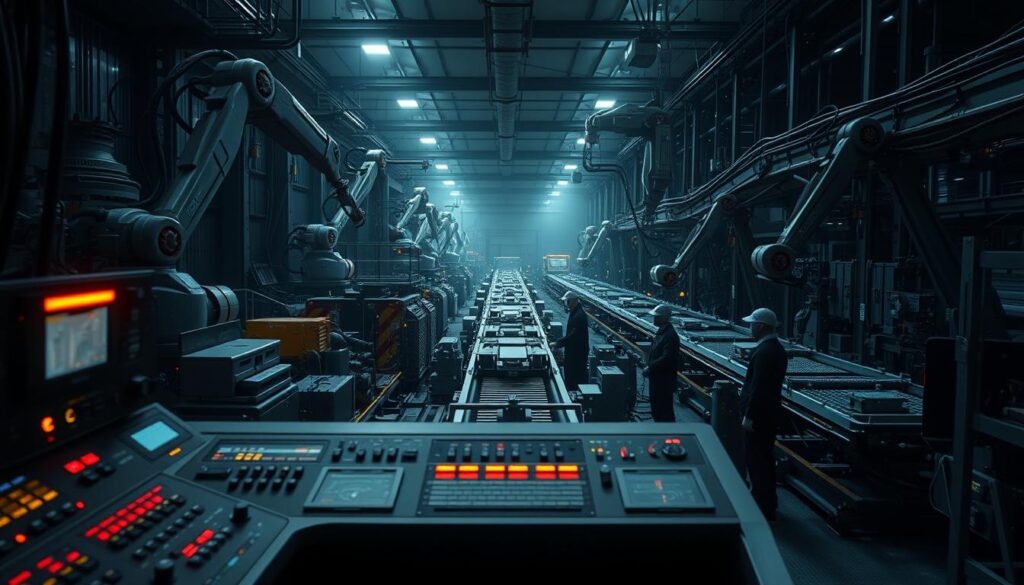
One of the primary challenges is the workforce skill gap. The increasing complexity of automation technologies demands a workforce with advanced skills, yet there is a shortage of professionals with the necessary expertise. This gap can hinder the adoption and effective use of new technologies.
Another challenge is the integration of new technologies into existing systems. As new automation solutions emerge, companies must be able to integrate these technologies seamlessly into their operations. This requires not only technical capability but also significant investment.
Regulatory hurdles also pose a significant challenge. The industry is subject to a range of regulations and standards that can vary by region and country. Navigating these regulatory landscapes can be complex and time-consuming, potentially slowing the adoption of new technologies.
“The key to overcoming these challenges lies in collaboration and investment in education and training. By working together, industry stakeholders can develop the skills needed to drive innovation and ensure the continued growth of the robotics and automation sector.” – Dr. Werner, Automation Expert
To address these challenges, the industry can adopt several strategies:
- Invest in education and training programs to develop the necessary workforce skills.
- Promote collaboration between industry stakeholders to share best practices and develop common standards.
- Invest in research and development to drive innovation and improve the integration of new technologies.
| Challenge | Impact | Potential Solution |
|---|---|---|
| Workforce Skill Gap | Hinders adoption of new technologies | Education and Training Programs |
| Integration of New Technologies | Requires significant investment and technical capability | Collaboration and Standardization |
| Regulatory Hurdles | Complex and time-consuming to navigate | Advocacy for Clear Regulations |
By understanding and addressing these challenges, the industrial automation sector in Germany can continue to thrive and lead the way in technological innovation.
Innovations and Trends Shaping the Future
As the robotics and automation industry in Germany continues to evolve, new trends and innovations are coming to the forefront.
The integration of Artificial Intelligence (AI) is one of the significant trends transforming the industry. AI is enhancing the capabilities of robots, making them more versatile and efficient in performing complex tasks.
Sustainability initiatives are another crucial aspect shaping the future of the industry. Companies are focusing on developing eco-friendly automation solutions that reduce energy consumption and minimize environmental impact.
Human-robot collaboration is also gaining prominence. This trend involves designing robots that can work safely alongside humans, enhancing productivity and improving workplace safety.
The table below highlights some of the key innovations and their potential impact on the industry:
| Innovation | Description | Potential Impact |
|---|---|---|
| AI Integration | Enhancing robot capabilities with AI | Increased efficiency and versatility |
| Sustainability Initiatives | Developing eco-friendly automation solutions | Reduced environmental impact |
| Human-Robot Collaboration | Designing robots to work alongside humans | Improved productivity and safety |
These innovations are set to drive the future growth of the robotics and automation industry in Germany, making it a leader in Industry4.0 technologies.
The Role of Industry 4.0 in Automation
Industry4.0 represents a new era in automation, leveraging IoT and AI to enhance productivity. This concept is transforming the manufacturing landscape in Germany by integrating advanced technologies such as cyber-physical systems and artificial intelligence.
The principles of Industry4.0 are centered around creating a more interconnected and intelligent manufacturing process. This involves the use of advanced robotics and automation technologies to improve efficiency and reduce production times.
The impact of Industry4.0 on German manufacturing has been significant. By adopting these advanced technologies, manufacturers have been able to increase productivity and improve product quality. Some of the key benefits include:
- Enhanced flexibility and customization capabilities
- Improved product quality through precision manufacturing
- Reduced production costs through efficient use of resources
Several case studies have demonstrated the successful implementation of Industry4.0 in German manufacturing. For instance, companies like Siemens and Bosch have integrated Industry4.0 technologies into their production processes, resulting in significant improvements in efficiency and productivity.
Key Technologies Driving Industry4.0
The success of Industry4.0 is driven by several key technologies, including:
- Cyber-physical systems that integrate physical and computational processes
- Artificial intelligence and machine learning to improve decision-making
- The Internet of Things (IoT) to enable real-time data exchange and monitoring
These technologies are being used across various industries in Germany, from automotive manufacturing to pharmaceuticals, to enhance automation and improve overall efficiency.
In conclusion, Industry4.0 is playing a crucial role in shaping the future of automation in Germany. By leveraging advanced technologies and improving manufacturing processes, Industry4.0 is helping to maintain Germany’s competitive edge in the global market.
Educational Pathways and Career Opportunities
As the robotics and automation industry continues to evolve, Germany is at the forefront, offering various educational pathways and career opportunities. The country’s strong emphasis on technical education and vocational training has created a robust ecosystem that supports the growth of skilled professionals in this field.
Several universities and technical institutions in Germany offer degree programs in robotics, mechatronics, and automation. These programs are designed to provide students with a comprehensive understanding of the technical and theoretical aspects of robotics and automation.
For instance, institutions like the Technical University of Munich and University of Stuttgart are renowned for their research and teaching in robotics and automation. These programs often include hands-on training and collaboration with industry partners, preparing students for the demands of the job market.
“The future of robotics and automation lies in the hands of the next generation of engineers and technicians. It’s crucial that we provide them with the right educational foundation and training to succeed.”
In addition to degree programs, Germany also offers various technical training and certification programs tailored to the needs of the robotics and automation industry. These programs are designed to equip individuals with specific skills that are in high demand by employers.
Career opportunities in the robotics and automation sector are diverse, ranging from roles such as robotics engineers and automation specialists to maintenance technicians and system integrators. Companies like Siemens and Bosch are among the major players in Germany that offer a wide range of job opportunities in this field.
- Robotics Engineer
- Automation Specialist
- Maintenance Technician
- System Integrator
The job market outlook for professionals in robotics and automation remains positive, driven by the ongoing advancements in technology and the increasing adoption of automated systems across various industries.
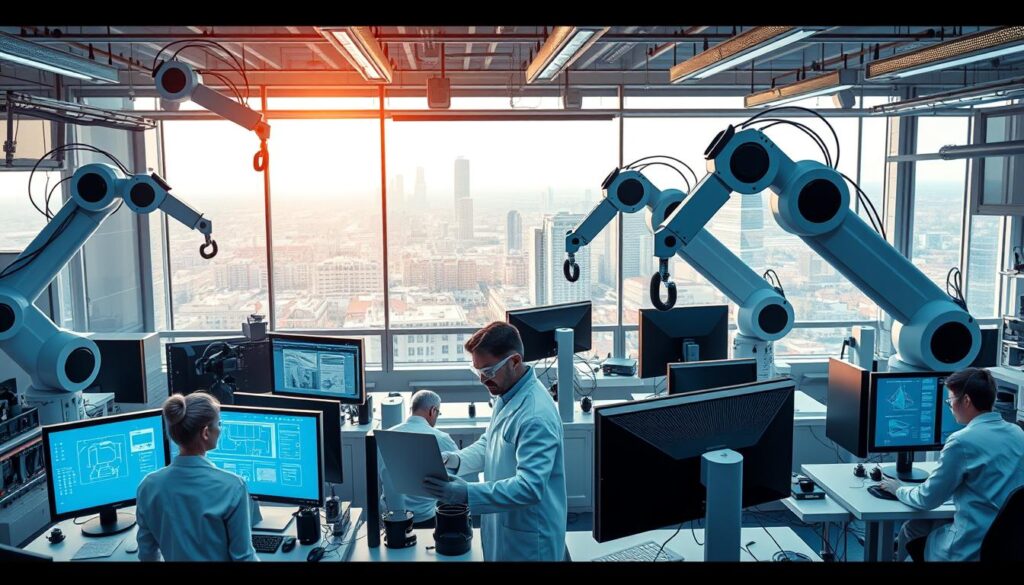
As Germany continues to lead in the robotics and automation industry, the demand for skilled professionals is expected to grow. Individuals with the right educational background and training will find numerous opportunities in this dynamic and evolving field.
Future Prospects for the Industry
The robotics and automation industry in Germany is on the cusp of a new era, driven by innovation and investment. As the sector continues to evolve, it is expected to have significant economic implications, enhancing Germany’s global competitiveness in the manufacturing sector.
Technological advances in automation Germany are a key driver of this growth, enabling industries to increase efficiency and reduce production costs. The adoption of industrial automation solutions is becoming more widespread, transforming traditional manufacturing processes.
- Increased productivity through automated systems
- Improved product quality due to precision engineering
- Enhanced competitiveness in the global market
For more insights into the robotics industry in Germany, visit Duscons to explore the opportunities and challenges in this evolving landscape.
The future looks bright, with long-term growth predictions indicating a continued upward trend. As Germany remains at the forefront of technological innovation, its robotics and automation industry is poised to lead the way in shaping the future of manufacturing.
Conclusion: Navigating the Robotics and Automation Landscape in Germany
The Robotics and Automation Industry in Germany is undergoing rapid transformation, driven by technological advancements and evolving market demands. As a leader in Industry4.0 Germany, the country is at the forefront of integrating automation and robotics into various sectors.
Key players in the German robotics sector are driving innovation, with applications of automation in manufacturing being a significant area of growth. Government support and investment are also crucial in fostering the industry’s development.
As the industry continues to evolve, it is essential to address the challenges facing the sector and capitalize on emerging trends and innovations. Educational pathways and career opportunities are expanding, providing a skilled workforce to drive the industry forward.
With Industry4.0 Germany at the helm, the future prospects for the Robotics and Automation Industry in Germany are promising. As the industry continues to navigate the complex landscape, it is poised for sustained growth and innovation.